


Sailing the Northwest Passage (part 3)
In the July/August and September/October issues of The Islander, I reported on the expedition I joined through the Northwest Passage this summer aboard Alma af Frøya, a wooden, gaff-rigged replica of Roald Amundsen’s Gjøa.
This is the third and final report.
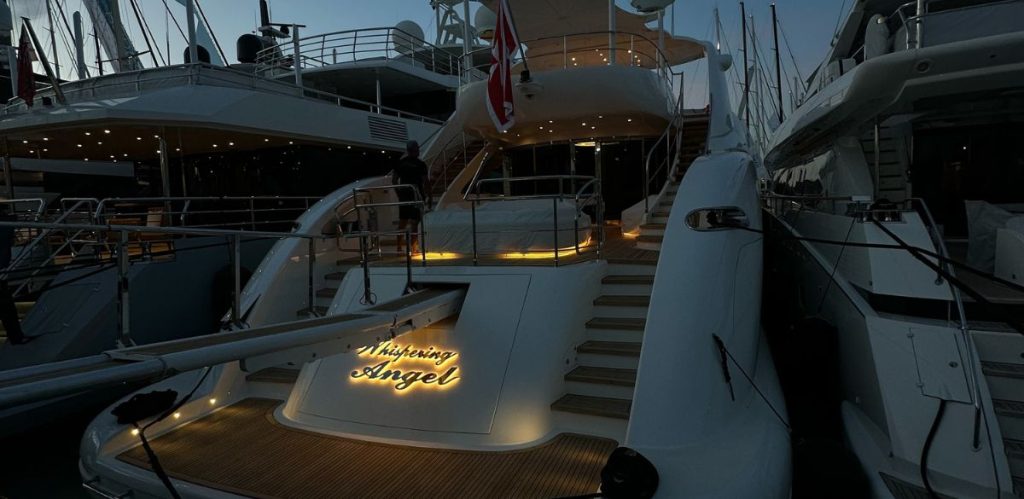
Nome, Alaska, is a dusty and remote gold miner’s town. Not as remote as the settlements of the Canadian Arctic we’ve just visited but still, you can only get there by plane or boat. It’s Sunday and many of the villagers hanging out around the only three bars appear to be drunk and stoned. Unfortunately there’s just not much else to do for them. Well, one guy wanted to get into a fight with me. It was more of an invite than a threat. I didn’t accept and he left it after I got up from my barstool and he had to tilt his head far back to maintain eye contact. In the back of the saloon I saw a group of people play Jenga. They looked too cheerful and too fresh to be local. I approached them and learned they were the crew of a 45m sailing yacht. A few of them were Mallorca residents and readers of The Islander! I remembered, two weeks earlier, speaking on the radio with the crew of Diablesse and discovering they had two Mallorca-based crew on board as well. Unlike us they had sailed from Alaska to Greenland, in the opposite direction. So of 10 yachts completing the Northwest Passage this summer, 3 had Islanders on board! So I invited them to collaborate on my last NWP report and compare notes.
We all experienced the ice, isolation, wildlife and Arctic communities aboard very different vessels. A 45m luxury sailing yacht whose name we’re not allowed to disclose. Diablesse, a 28m aluminium expedition sloop-rig from 1985. And Alma, a gaff-rigged wooden replica of Amundsen’s Gjøa.
I spoke to Constanza “Coni” Manfredi and Carlos Damiani of S/Y Diablesse, and Margarita and Melissa of the 45m luxury sailing yacht about how they ended up in the Arctic, their highest and lowest moments, and what they brought home from the experience.
How do you end up there?
None of us appear to be good at turning down an adventure.
Coni Manfredi grew up in Bahía Blanca, Argentina, where her Italian grandfather was a Snipe champion and introduced her to sailing. After more than ten years living in Mallorca and six years working in yachting, she had most recently been varnishing classic yachts when some Mallorcan friends called with an unusual request. They urgently needed somebody who could cook, understood boats and was willing to sail through the Arctic.
Her reaction was immediate. “The Arctic! How am I going to say no to the Arctic?”
She joined the 100-foot aluminium sailing yacht Diablesse for the Sailing for Prosperity expedition.
Carlos Damiani, from Mallorca, had a rather longer run-up. He joined Diablesse in Cabo, Mexico, about four years ago as an officer and later rotated with Captain Juan Miguel Bisbal. After sailing the boat north to Vancouver, they began a major refit. When the Mexican owner proposed taking the yacht through the Northwest Passage, what followed was around a year and a half of preparation.
Margarita, a Greek-English sailor living in Mallorca and Chief Mate <3000 GT, had already sailed across the Atlantic, Caribbean and Pacific and visited the Arctic in Svalbard. The 45-metre sailing yacht on which she works as First Officer has an appetite for remote cruising, so Greenland and the Northwest Passage fitted rather nicely into the programme.
Melissa, born in Surrey and raised in Menorca, had learned to sail in Mahon harbour as a child. She had been working aboard superyachts for nearly four years, but had only moved into sailing-yacht cheffing seven months before the expedition.
She then decided that her first role as sole chef might as well involve feeding 14 people while crossing one of the most isolated regions on the planet.
Why make things easy?
Into the ice
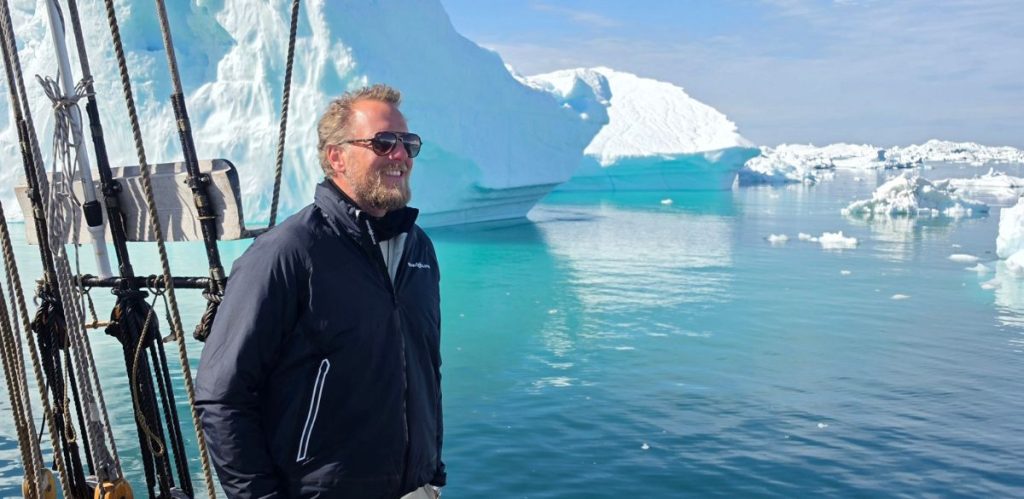
Navigating ice means watching forecasts and ice charts, waiting, diverting and trying to judge what the ice might do next. On Alma we found ourselves a few times caught in fog or darkness, surrounded by ice. Circumstances that make distances, timing and scale become strangely difficult to work out.
For Carlos, navigating close ice became one of the professional highlights. “You have to constantly read the ice, adapt your route and make decisions based on conditions that can change very quickly.”
Coni remembers occasions when Diablesse simply had to anchor and wait for days before attempting to continue.
When they finally could move, it became a team operation. Javi went ahead in the dinghy moving pieces of ice. Carlos climbed the mast to guide the yacht through from above, while two crew stood on the bow with poles, keeping ice away from the hull.
It is an image that neatly demonstrates something I learned aboard Alma too: despite all our modern equipment, Arctic navigation can occasionally become remarkably primitive. With a strong boat and crew it’s so much fun though!
When things stop working
Compared to the first explorers of the Northwest Passage we are aided tremendously by modern technology. Until it stops working!
At one stage aboard Alma, steaming coolant and a maxed-out temperature gauge revealed a curious issue with the engine’s internal cooling system. With not an inkling of wind and a light current pushing us at around one knot towards rocks some eight miles away, we had to be resourceful. Another time our steering failed while under full sail surrounded by icebergs.
Carlos experienced that vulnerability differently.
His most uncomfortable moment came crossing Baffin Bay at night without a functioning radar, in waters containing icebergs the size of buildings.
The crossing took around three days longer than expected.
“It was probably the point during the expedition when I was most aware of how vulnerable we were and how quickly things could become serious in the Arctic.”
That feeling is difficult to explain until you have experienced it. The Arctic is breathtakingly beautiful, but unforgiving.
The rewards
The Arctic can give you magical moments, often after long periods of boredom. For Coni, one of the magical moments came during the three-day crossing towards Sisimiut, Greenland. At two in the morning she was woken and told to come outside.
Above Diablesse, sailing at around 15 knots, the Northern Lights were dancing across the sky.
“It left all of us speechless. It felt like an incredible gift from nature.”
I know the feeling. After the frustrations of machinery problems, delays and monotonous stretches aboard Alma, the Arctic had an uncanny ability to suddenly compensate.
I remember one glass-calm, misty day fishing for Arctic char, seals appearing around us, abandoned cabins disappearing into the haze and Alma sitting almost ghostlike in the distance. Nothing particularly spectacular happened. We caught fish, cleaned them, had a whisky and absorbed the silence. It remains one of my favourite days of the expedition.
Margarita’s Arctic offered rather more energetic entertainment: “We went swimming in the freezing Arctic water and climbed onto icebergs as they floated past the boat.”
Fortunately, her yacht had a sauna!
The wildlife was another recurring highlight. Polar bears feature prominently in everyone’s memories, as do beluga whales and narwhals. I actually ate narwhal when a local woman offered it to us in Greenland.
Melissa describes seeing the polar bears and belugas simply as “out of this world”.
After weeks aboard, encounters like these, combined with the unique landscapes and of course the ice, make the Arctic the closest you can get to visiting another planet without leaving this one.
Five sailors, five different challenges
Not every low point involved mortal danger.
Margarita missed vegetables and greenery. After enough time in a landscape entirely devoid of trees, the colour green apparently becomes surprisingly exciting.
Long expeditions are not continuous adventure and excitement. Sometimes the landscape is only mildly interesting. Sometimes people get on each other’s nerves. Sometimes the weather stops you. Sometimes the engine stops you. Sometimes you simply have to sit out another day. The continuous daylight we experienced until mid-August makes one day feel like two. Most of the settlements we visited didn’t bring much entertainment either. Many of them didn’t even have a single meeting place like a café or restaurant. You are forced to slow down and observe.
Learning to manage your own mood becomes part of seamanship.
Melissa’s anxiety was more immediate: would everybody get fed?
Provisioning for 14 people in the Arctic is no small responsibility, particularly when it is your first sole-chef position: “I had some scary moments thinking I’d run out, but we always had plenty.” But she pulled it off.
It shows how achievement comes in different forms.
The people at the top of the world
It seems that for all of us, the people were perhaps the biggest surprise.
Carlos says meeting Inuit communities was the personal highlight of his entire passage. “The way we were welcomed and treated, and everything they shared with us, left a very strong impression on me.”
My experience was similar. In Cambridge Bay, we welcomed Inuit elders aboard Alma. Some had been born “on the land” and they shared songs, drums, dance and stories with us. In Tuktoyaktuk, Joe, a hunter and his wife Diane invited me to their family table to eat goose while he told stories of survival in the Arctic wilderness. Encounters like these changed the Passage from an expedition through an empty wilderness into a journey through somebody else’s home.
Coni was struck by the resilience required to live there. She describes the Inuit as “survivors” and believes there is much we can learn from communities that have adapted to such extreme conditions.
That word, adaptation, kept returning throughout our journeys.
Sailing through history
For Margarita, another presence travelled with her: the sailors who had attempted this route long before us. During the passage she read about Sir John Franklin’s doomed expedition aboard HMS Erebus and Terror. To read about those men while actually sailing through the same waters gave her a different appreciation of their undertaking.
“They had so little compared with what we have today, yet they ventured into an environment that is still incredibly challenging even with modern technology.”
I felt that connection particularly strongly aboard Alma. Our vessel was built as a replica of Amundsen’s Gjøa, the ship that completed the first successful transit of the Northwest Passage between 1903 and 1906.
We had satellite communications, electronic charts, weather forecasts and ice information and still, plenty went wrong. It makes what those early explorers attempted difficult to comprehend. Similar to space travel today… or maybe even more dicey still.
What comes home with you?
Carlos returned with perhaps the darkest reflection.
Travelling through some of the most remote places on Earth, he saw retreating glaciers, wildlife approaching settlements looking for food and industry pushing farther into previously inaccessible regions. “How have we managed to affect places this vast and this remote?” His conclusion is uncomfortable: our way of living is not sustainable, and none of us can conveniently exclude ourselves from that responsibility.
Coni came home thinking more about priorities. “Sometimes you need to find yourself in hostile places to realise that you already have everything.”
Melissa came back proud. She had thrown herself into the deep end professionally, made it through and now wants more “crazy adventures”.
Margarita returned with an even greater desire to explore the remote corners of the world.
What did I take with me?
The Arctic can make you feel insignificant and immensely alive at exactly the same time. The timewarp I experienced and the vast emptiness of the sea but also the land and even the skies, which are devoid of planes… It’s mind-boggling. Nobody is there. And those who are there look after each other and their visitors. Because you have to. To survive.
Read PART 1
Read PART 2






0 Comments