



On a Thursday morning in the port of Colònia de Sant Jordi, representatives from local authorities and marine conservation groups gathered on the docks to board a Cabrera National Park service vessel. Surrounded by the commotion of park rangers, aquarists, and technicians loading equipment onto the boat, excitement was in the air. On deck in two special water tanks swam 30 juvenile nursehound sharks (Scyliorhinus stellaris), known locally as Gatvaire. Their destination: the protected waters of the Cabrera Archipelago, where they were to be released as the final milestone of the Acció Stellaris project.
A unique collaborative effort
Acció Stellaris is a collaborative project, part of the broader ‘Petits Taurons’ (Small Sharks) initiative, bringing together no fewer than eight entities, ranging from NGOs and research institutions to private companies and public authorities: the Regional Ministry of Agriculture, Fisheries and Natural Environment, Palma Aquarium Foundation, Mallorca Preservation Foundation, PIM Initiative, Save the Med, Shark Med, Marilles Foundation, the Marine Research and Aquaculture Laboratory (LIMIA), the Cabrera Archipelago Maritime-Terrestrial National Park and the Balearic Federation of Fishermen’s Guilds. The project was launched in 2021 with the aim of obtaining more information and data on the Gatvaire and attempting to recover its population in the Balearic Sea, as it is assessed as an Endangered species in the Red Book of Fishes of the Balearic Islands.
Each organisation brought vital assets to the table, from funding and scientific knowledge to hands-on operational support. Thanks to their joint efforts, a total of 389 juvenile nursehounds, hatched and raised across the Cabrera National Park Visitor Centre, LIMIA, and Palma Aquarium, have now been released into protected waters such as the Cabrera National Park and the marine reserves of El Toro, Palma Bay, and Sa Dragonera.
Small sharks, big purpose
Though adults reach up to 130 cm in length, nursehounds are striking creatures at any size, characterised by leopard-like spots, slit pupils, and long, sweeping tails. Even the juveniles on board, just a year old and under 50 cm, were a captivating sight. Reared by humans from eggs, these little sharks appeared almost curious and confident. The staff from the Cabrera National Park who raised them displayed unwavering dedication throughout the journey, carefully stabilising the water tanks and monitoring conditions as the vessel charted toward the release site.
Yet their charm and distinctive demeanour are secondary to their ecological value. Nursehounds play a crucial role in the marine food web of the Balearics. As mid-tier predators, their presence is a key indicator of a balanced ecosystem. In contrast to the rest of the Mediterranean, where this species is not considered Endangered, local populations have declined significantly due to habitat alteration, accidental capture, and historical exploitation, including the harvesting of their rough skin for use as sandpaper.
Given the alarming number of threatened shark species across the region, passive conservation in the Mediterranean is no longer enough. Active restoration, such as reintroducing captive-bred individuals, is essential for bringing these populations back. Programmes like Acció Stellaris also generate crucial, transferable knowledge. They allow researchers to refine breeding techniques for oviparous, or egg-laying, shark species and overcome operational hurdles now, rather than waiting until other shark species are on the brink of extinction.
Beyond the numbers
The achievements of the Acció Stellaris project extend far beyond the numbers. While successfully reintroducing nearly 400 juvenile nursehound sharks into protected Balearic waters is a monumental conservation milestone, the project has also closed critical gaps in scientific understanding, shedding light on a species whose ecology was largely unknown when work began. But the true impact reaches well beyond biological recovery. By actively engaging local fishermen in sustainable practices and keeping the public informed, the initiative has reshaped community perceptions, turning a once-overlooked shark into a symbol of marine stewardship and proving that lasting conservation relies as much on societal awareness as it does on science.
Building on the project’s success, the partners behind the Petits Taurons initiative can now apply these key learnings and experience to future shark conservation projects.
Returning home
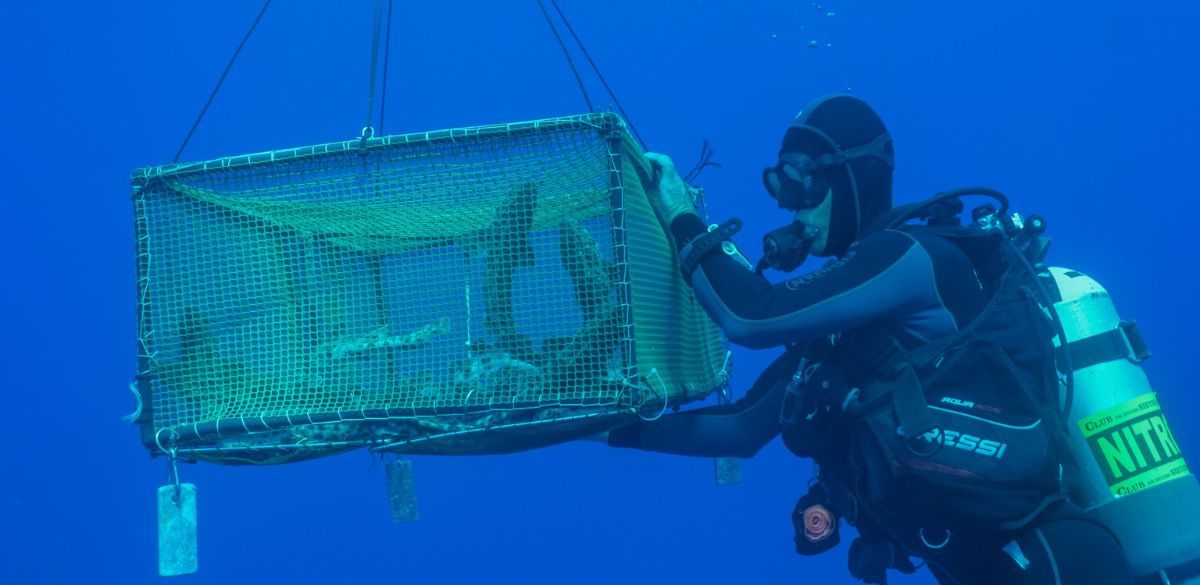
Upon reaching the Cabrera National Park, everyone on board gathered at the deck to witness the final stop of the journey. Below the hull, a special cage holding the young nursehounds was gently lowered into the water, closely guided by a team of divers. At a depth of 30 metres, the cage doors swung open. Though these little sharks were encountering the open sea for the very first time, they were finally home and free, a quiet triumph for the species, and a vital step forward for the health of the entire Mediterranean marine ecosystem.
www.savethemed.org
Instgram: @savethemedfoundation







0 Comments