



Coral reefs are often called the rainforests of the sea, supporting nearly a quarter of all marine life while protecting coastlines, sustaining fisheries, and driving tourism economies. Yet rising ocean temperatures, pollution, and destructive fishing practices are pushing reefs toward collapse. Across the world, scientists, NGOs, governments, and coastal communities are now racing to regenerate damaged reefs before climate change outpaces restoration efforts.
Today, reef regeneration projects are most active in the Caribbean, the Great Barrier Reef, the Maldives, Indonesia, French Polynesia, and parts of the Red Sea. Florida’s coral restoration initiatives, led by organisations such as NOAA and Coral Restoration Foundation, have become some of the largest in the world, involving underwater coral nurseries and mass coral planting programmes. Australia is also investing heavily in larval reseeding, coral farming, and heat-resistant coral research on the Great Barrier Reef.
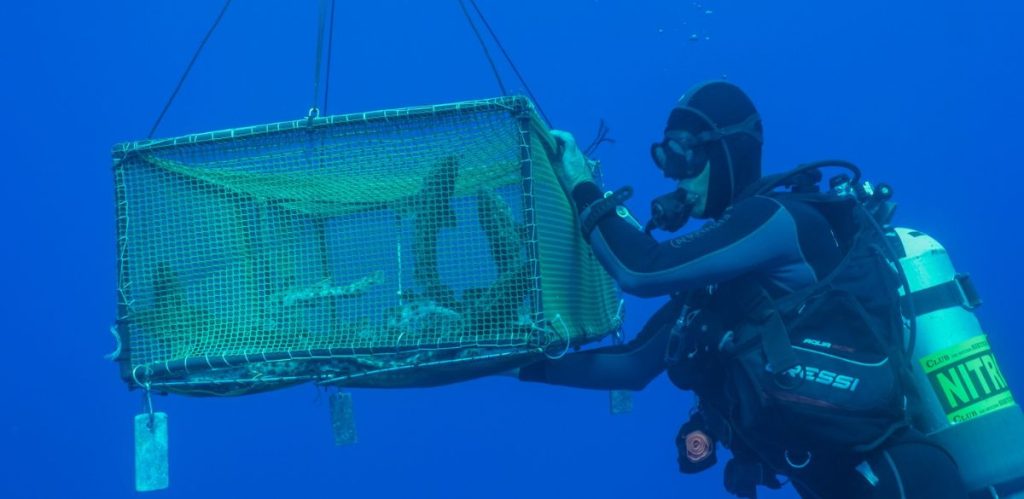
The most successful regeneration programmes share a common formula: local stress reduction combined with long-term climate resilience planning. In Indonesia and the Maldives, coral gardening and artificial reef structures have restored reef growth in localised areas within just a few years. Some projects now use selectively bred or naturally heat-tolerant “super corals” capable of surviving warmer waters.
However, restoration is far from guaranteed. Scientists estimate that 30–40% of coral restoration projects fail because of poor planning, lack of maintenance, pollution, or ongoing warming events. In some locations, newly planted corals have been wiped out by a single marine heatwave only months after transplantation.
The greatest threat remains rising ocean temperatures. Global bleaching events are becoming more frequent and severe, with more than 80% of reef systems recently exposed to extreme heat stress. Even healthy restored reefs may struggle to survive if global warming exceeds 1.5–2°C.
Despite these challenges, restoration still matters. Healthy reefs can recover faster after bleaching events, support fisheries, and preserve biodiversity while broader climate action develops. Experts increasingly describe reef regeneration not as a permanent solution, but as a critical tool to buy time for ecosystems under pressure.
Yacht crews, divers, and ocean enthusiasts also play a growing role in reef recovery. Simple actions can have measurable impact: using reef-safe sunscreen, avoiding anchoring on coral, reducing plastic waste, reporting bleaching events, and supporting marine protected areas all help reduce local stress on reefs. Volunteer dive programmes now allow yacht crew members to assist with coral nurseries, monitoring, and reef-cleaning operations in destinations such as Fiji, French Polynesia, and the Caribbean.
Encouragingly, significant reef regeneration work is now happening directly in the cruising grounds that yacht crews frequent. In the Pacific, Atlantic, and Indian Ocean alike, local projects are actively restoring reefs in popular anchorages and island groups, meaning crews are increasingly likely to encounter restoration buoys, nursery frames, or protected regeneration zones on passage.
This is especially true in the Eastern Caribbean, where dedicated local organisations are doing hands-on work in some of the region’s most-visited yacht destinations: in St Maarten, the Nature Foundation SXM runs coral nurseries and the IntelliReefs programme restoring reefs damaged by hurricanes (@naturefoundationsxm).
In Antigua, AnuBlue Ocean Restoration operates underwater nurseries at Green Island and Cades Reef, growing and outplanting elkhorn and brain corals onto degraded reef sites. (@anublueocean)
In the BVI, both the Association of Reef Keepers, which runs coral restoration and sustainable cruising programmes across the territory (@bviark), and Beyond The Reef, which creates artificial reef structures and treats coral disease (@1beyondthereef), are active in waters crews sail through every day. For broader regional and global coverage, also follow: @coralrestorationfoundation (Florida Keys and wider Caribbean), @coral_gardeners (Moorea, French Polynesia), @coraltriangle (Indonesia and the Coral Triangle), and @reefcheck (global reef monitoring across multiple cruising regions).
Follow these Instagram accounts to educate yourself and others and as part of your support to the oceans we work on.




0 Comments