


Marine biologists from Mallorca-based organisations Shark Med and Save the Med Foundation, as well as from Université Perpignan Via Domitia, placed the Balearics at the forefront of marine conservation after presenting innovative underwater filming systems at the Sharks International Conference 2026 in Sri Lanka.
Sharks International is the global epicentre of elasmobranch (sharks and rays) research and conservation, where this year marine biologists from Mallorca took centre stage. On behalf of two marine conservation organisations and Eric Clua, a renowned French scientific research faculty, Save the Med co-founder and shark expert Gabriel Morey gave a presentation on improved and more accessible Baited Remote Underwater Video systems (BRUVs). He explained what these BRUVs consist of and the improvements made that make a key difference in facilitating research compared to classic systems used to date. He demonstrated to the international scientific community that uncovering crucial information for the protection of threatened shark species is possible in the Mediterranean, and anywhere else worldwide, thanks to a low-cost and easily deployable technological innovation.
The Mediterranean challenge: finding needles in a blue haystack
Studying sharks in the Mediterranean Sea is a monumental challenge. Due to historical overfishing and habitat degradation, population densities of elasmobranchs are critically low. Home to 44 species of sharks, 34 species of rays and 2 species of chimaeras, almost half (40%) of these species are threatened with extinction in the region according to the 2022 IUCN Red List of Marine Mediterranean Fish. Improving access and quality of research efforts to inform conservation strategies is therefore all the more urgent.
Traditionally, most studies have been based on fishing activity, with a number of life-history features (e.g. age, growth, diet, fecundity) making necessary the examination of dead specimens. BRUVs are a more modern tool that complements fishery-dependent research. Though the latter continues to play an important role in uncovering findings, BRUVs make it possible for marine biologists to study sharks and rays in their natural habitat without interfering or disturbing them. For a picture tells a thousand words: a wealth of information can be extracted from these recordings, including the diversity of species captured on camera, the physical condition of individual animals, such as identifying fishhook injuries, and the number of sharks attracted to the bait. Recorded images help inform the abundance (or scarcity), health and threats to sharks and rays.
While BRUVs are a scientifically viable and technically straightforward tool, these systems face two major limitations: battery autonomy and image data storage. In waters where sharks are scarce and can take days to appear, cameras must be capable of recording for extended periods. To overcome these limitations, Shark Med developed an innovative and low-cost technology tailored to the specific needs of the Mediterranean.
In his presentation “Improved BRUV-24h adapted for scarce and elusive elasmobranch species of the Mediterranean Sea”, Gabriel Morey explained how the first BRUV was designed for the surface and open waters or water column, otherwise known as pelagic environments in science-speak. Powered by a solar panel system that fuels a large on-board battery and integrated hard drives, this device can run for days or even weeks without human intervention, requiring only periodic bait refreshes every few days. This technology is already providing crucial data on Blue shark (Prionace glauca) populations around the Balearic Islands without having to rely on information from the fishing sector.
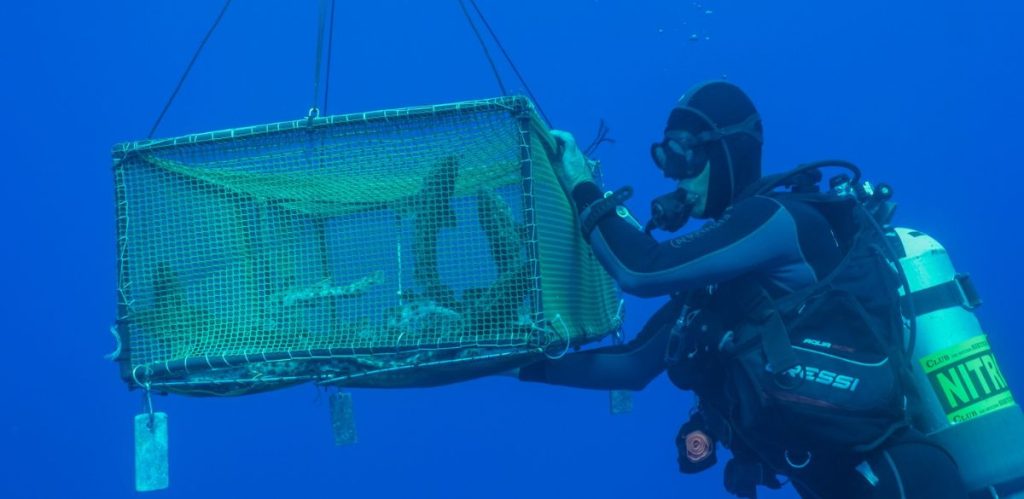
But not all sharks swim in pelagic waters. Many elasmobranch species roam in greater depths, also known as benthic environments, that are challenging for scientists to access and observe. The deep-sea habitats of the Mediterranean hold invaluable conservation worth, prompting Shark Med and Save the Med to develop a system capable of filming continuously for two days at depths exceeding 100 metres. This low-cost technology has successfully gathered unprecedented data on the Bluntnose sixgill shark (Hexanchus griseus), a deep-sea species that can attain 5 m in length and which to date had not been captured on camera in its natural habitat in the Balearic Sea.
Findings from the deep: what 3,000 hours of video reveals
To address the critical lack of data on Mediterranean elasmobranchs, the BRUV innovations were successfully tested and deployed during a two-year study from 2024 to 2025 in the protected waters of the Cabrera National Park, led by Shark Med and Save the Med, and backed by the European Union’s NextGenerationEU fund alongside the Marilles Foundation.
The data gathered using these technologies has been significant for elasmobranch conservation efforts in the Balearic Islands. A total of 17 elasmobranch species were identified, and 3,000 hours of video, combining pelagic and benthic BRUVs, were recorded across both day and night. The information obtained throughout different seasons, made possible thanks to the improved autonomy of the devices, allowed our team to analyse solid findings related to seasonality, ecology and potential external interference, as well as to draw important conclusions from the evidence.
For example, aside from blue sharks, numerous large pelagic species should be observable in our waters, such as the great white, hammerhead, mako, thresher or copper shark. Yet, out of thousands of hours of footage, only a single mako was recorded, captured by a benthic BRUV positioned at a depth of 80 metres. This finding alone confirms that shark populations in the Mediterranean remain at a critical level, and that action must be taken immediately to improve the protection and conservation of elasmobranch species, not only for their own sake and right to exist, but also to preserve the ecosystem balance of the Mediterranean Sea.
From Mallorca to the world
By making advanced BRUV technology accessible and low-cost, this Mallorcan innovation gives researchers everywhere a practical tool to advance the research and protection of threatened sharks and rays worldwide. Presenting these breakthroughs at the Sharks International Conference 2026 not only highlights the hard work of Save the Med and Shark Med, but it also proves that Mallorca is now exporting real, working conservation solutions to other oceans facing similar challenges.
Source: 2022 IUCN Red List of Marine Mediterranean Fish — https://www.iucn.org/sites/default/files/2022-08/red-list-of-fish-factsheet.pdf






0 Comments