
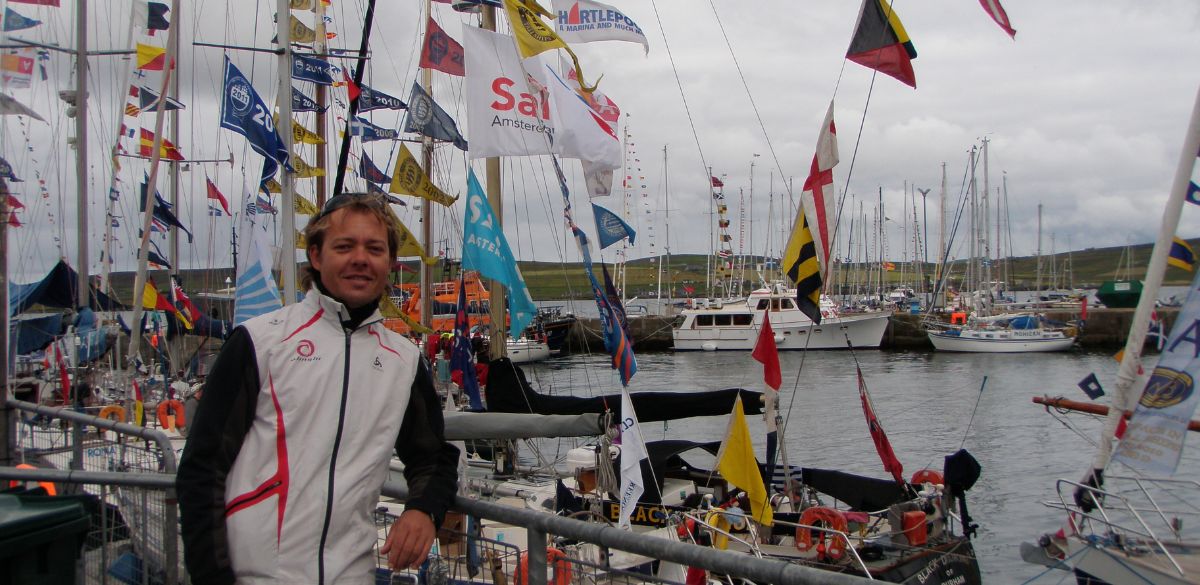


For Captain Sven Vandendriessche, a life in yachting was never a career choice so much as a natural progression. Raised in a family-run shipyard in Estepona and shaped by both his Belgian heritage and Andalusian upbringing, Sven’s earliest lessons came not from a classroom but from the workshop floor and the waters beyond. Today, after decades at sea, involvement in high-profile racing campaigns, the construction of world-class yachts, and years of trusted service to owners, he reflects on the experiences that have defined an extraordinary career.
Growing up around your father’s shipyard in Estepona must have given you a unique introduction to the maritime world. What are your earliest memories of boats and shipbuilding, and when did you realise yachting would become your career?
As the oldest of three children, I was always the first one expected to help in the family business. In those days, particularly with my father’s Belgian traditions, it was simply understood that children would contribute.
My earliest memories are from when I was 13 or 14 years old, spending weekends and school holidays working at the shipyard. I helped in the chandlery and worked on our painting and antifouling concession. I spent countless hours sanding and painting the bottoms of boats, usually wearing nothing more than shorts and a T-shirt. There were no masks, safety glasses or protective equipment back then; you simply turned up and got on with the job.
The moment I realised yachting would become my life came when I was 14. My uncle, Geert Vandendriessche, regularly sailed in the North Sea and took part in the Cutty Sark Tall Ships Race. In the summer of 1995, my father sent me to sail with him, and that experience changed everything. From that moment, I knew this was what I wanted to do.
Afterwards, I continued spending summers at the shipyard, and in 1997, at the age of 17, I travelled to Hamble in the UK to complete what was then known as the “Zero to Hero” Yachtmaster course. Soon after, I began chartering our family’s 49-foot Sciarelli yacht in Puerto Banús, and the journey continued from there.
You’ve spent many years in the industry and worked your way onto some exceptional yachts, including Swan Alix. Can you walk us through the key moments and decisions that shaped your progression from your first role to captaincy?
One of the defining moments came in 1999 while I was working at the shipyard. A Dutch gentleman walked into the office looking for someone to deliver his newly purchased 72-foot yacht from IJmuiden in the Netherlands to Greece.
I still remember him bursting through the door and saying, “I need a captain to get my boat from Holland to Greece.” I looked at my father in disbelief, raised my hand immediately and said, “That’s me.” Before I knew it, I was setting off on my first major adventure.
Another pivotal moment came in 2006 when I met the owner of what would later become Aegir. He had just purchased a Jeanneau 54DS and was looking for someone to maintain the yacht and occasionally sail with him. That opportunity developed into serious racing campaigns, involvement in the construction of an 82-foot yacht in the United States, and ultimately led me to where I am today in Palma.
Looking back, many of the biggest opportunities in my career came from simply saying yes when adventure presented itself.
After nearly ten years with the same owner, you’ve experienced a level of longevity that few in the yachting industry achieve today. What has been the secret to building and sustaining such a successful relationship?
As difficult as it may sound, one of the lessons I learned early on was to be willing to find solutions rather than focus on obstacles.
The industry in the early 2000s was very different from what it is today. There were fewer regulations and more freedom to learn through experience. While professionalism and safety standards have rightly evolved, owners still appreciate people who are adaptable, dependable and willing to go the extra mile.
Trust is built through consistency. Owners want to know that when challenges arise, you will take responsibility, find solutions and always act in their best interests. If you can do that over many years, strong relationships naturally follow.
You were also involved in a new-build project, which is a very different challenge compared to running an existing yacht. What did that experience teach you, and what part of the process did you enjoy most?
What I enjoyed most was the communication and collaboration.
A new-build project brings together owners, designers, contractors, suppliers and shipyard teams, all with different perspectives and priorities. One of the captain’s responsibilities is to listen carefully, keep communication open and ensure everyone understands the bigger picture.
The experience taught me the value of building strong relationships across every part of a project. By bringing people’s ideas, concerns and objectives together, you help create an environment where everyone is working towards the same goal. It is a complex process, but seeing all those moving parts come together successfully is incredibly rewarding.
As someone who grew up in Spain with Belgian roots and has spent decades at sea, how have those different cultures influenced your leadership style and the atmosphere you create on board?
My upbringing has had a huge influence on how I lead.
I grew up sailing in a very family-oriented environment where we learned through experience and, often, through our own mistakes. I remember watching my father and uncle heading to sea with tremendous confidence, sometimes believing that reefing was only necessary if a hurricane was approaching. Naturally, that led to some valuable lessons along the way.
Combined with the professional training I later received through the RYA system, those experiences helped shape my leadership style. I like to create an atmosphere on board that is approachable and supportive while maintaining high standards and professionalism.
For me, the formula is simple: keep things straightforward, enjoy what you do, look after one another and always remain professional.
Looking back on your career so far, what has been your proudest moment in yachting, and what advice would you give to young crew members hoping to build a long and successful career in the industry?
That is a difficult question because much of my career has been spent finding my own way. I was never completely sure whether I was making the right decisions, and there were very few moments where someone would stop and tell me I was doing a good job.
One memory that stands out took place in Finland in early 2021. I was standing alone outside the Nautor Swan shed as Swan 98 Alix emerged after her final paintwork. The yacht was being moved out on a truck, and there was nobody else there, no owner, no crew, just me.
I remember looking at her and thinking, “What a beautiful yacht and what a special moment. Why is nobody here to see this?”
Then it dawned on me that I was there. I had been part of the journey and was witnessing the culmination of years of work, planning and dedication. It was a quiet moment, but one that made me immensely proud.
For young crew entering the industry today, my advice would be simple: work hard, stay curious and never stop learning. Opportunities often arrive when you least expect them, and success usually comes to those who are willing to step forward and embrace them. Every challenge teaches you something valuable, and over time those lessons become the foundation of a rewarding and lasting career.




0 Comments