
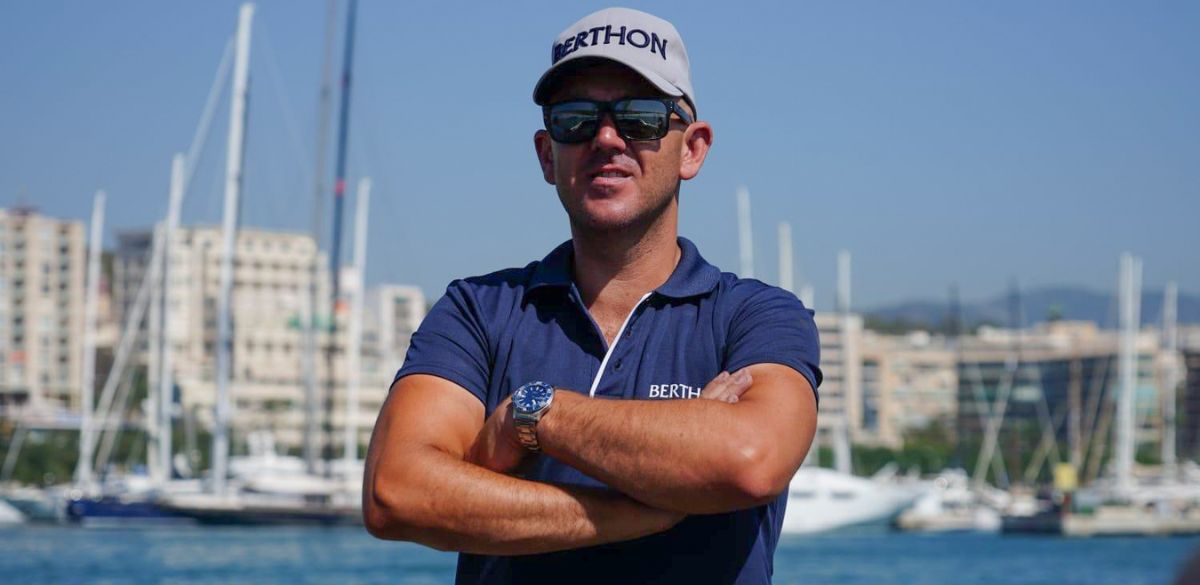


From early beginnings in finance to captaining yachts across the Mediterranean and ultimately building a successful marine engineering and maintenance business, Andrew Fairbrass has carved out a distinctive path in the yachting world. Now Managing Director of Berthon Spain, his journey reflects a blend of technical expertise, relentless work ethic, and an ability to adapt when life’s priorities shift. In this conversation, Andrew reflects on his career at sea, the turning points that shaped his trajectory, and how those experiences inform his leadership today.
Can you take us back to the beginning, what first drew you into the world of yachting, and how did you land your first role on board?
In my early twenties, I was working in finance, but I didn’t enjoy it. I’d always been drawn to the sea, so when the 2008 financial crash happened, I took it as an opportunity to make a change. I went to the UK Sailing Academy on the Isle of Wight to complete my Yachtmaster qualification. As it turned out, I also met my future first mate and now wife there.
Our first job together was running flotillas in Greece. It was incredibly hard work for very little pay, but it was also the best summer of my life. I learned a huge amount about engineering and boat handling, and that experience gave me the foundation I needed to move forward in my career.
What were the defining moments or experiences during your time at sea that shaped your career and perspective on the industry?
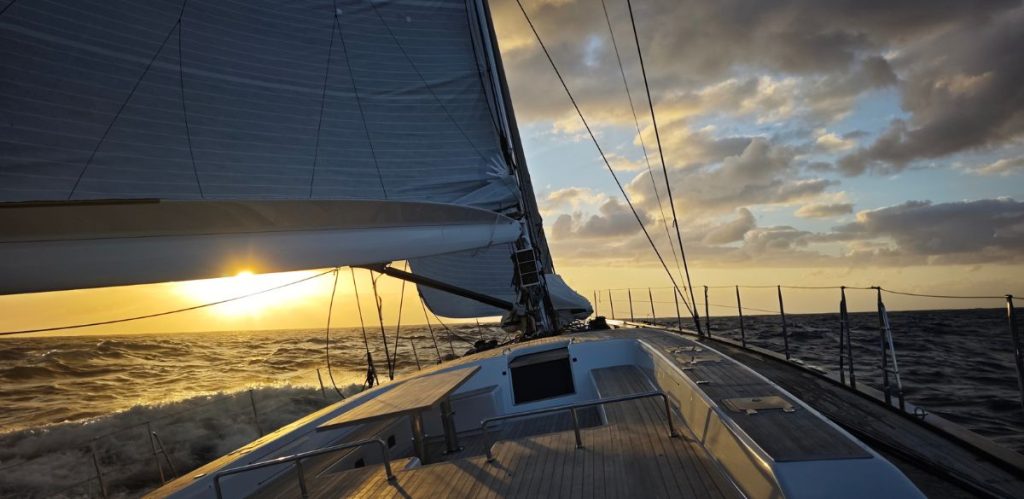
After that first season, we moved on to a much larger project, running a newly refitted Swan 68. The owner was keen for me to take full responsibility for maintenance, which I really enjoyed. It allowed me to deepen my engineering knowledge and develop a hands-on approach that’s stayed with me ever since.
We cruised from the UK down to Palma and throughout the Mediterranean, and during that time I developed a habit that still defines how I work today. I’m not someone who can sit still, so when the owner wasn’t on board, I’d walk through the boat with a notepad, front to back, inside and out, building detailed job lists. Before long, I’d have pages of small issues to address.
I always say: if you don’t have a job to do on board, you’re simply not looking hard enough.
When did you realise you wouldn’t remain a full-time captain indefinitely, and how did you navigate that transition ashore?
After three years running the Swan, my wife became pregnant with our first child. At the time, I didn’t fully appreciate how much that would change things. I had just completed my Chief Mate 3000 qualification and, perhaps naively, thought I could continue my yachting career as before.
After our son Arthur was born, we returned to Palma and I began job hunting. I was offered a captain’s role on a Royal Huisman sailing yacht, which I turned down, much to my wife’s frustration—because I wanted to move into the powerboat sector. Shortly after, I was offered a role running a 30-metre support vessel. I turned that down as well, opting instead to take on a delivery job with Jens from Invisible Crew. The boat, based in Fort Lauderdale, needed significant work before she was seaworthy. We spent four weeks repairing and preparing her before crossing the Atlantic back to Palma. Jens was a great support throughout.
But it was during that crossing that I realised being away from my wife and son wasn’t sustainable for me. That was the moment the idea of moving ashore and building something of my own really took hold.
I continued to captain the boat until she was sold, and in that same period I was introduced to my first Oyster client by Jamie Collins at Oyster. The client called me while I was on a canal holiday, and that conversation marked the beginning of what would become Berthon Spain.
How did your business evolve from those early days into what is now Berthon Spain?
The business originally started under the name Sentinel, and we were fortunate to see strong growth quite quickly. My aim was simple: to bring the standards and professionalism of the superyacht world to the care of smaller yachts. That approach really resonated with clients, and still does.
After four successful years, I sold a share of the business to Berthon UK and rebranded as Berthon Spain. It was a natural fit, as they share the same commitment to high standards and exceptional customer service.
Looking back now, how has your time at sea influenced the way you lead, manage, and connect with clients and crew today?
My time in yachting gave me the opportunity to learn from some outstanding industry leaders, and many of those lessons still guide me today.
One of my first bosses told me: never bring a problem without a solution. That’s something I instill in my team, it encourages accountability and critical thinking. Another taught me the importance of concise communication. He didn’t want long emails, just the problem, the solution, and the cost. That’s a principle we follow closely at Berthon Spain.
Technically, I’ve retained a deep curiosity about how systems work. I still find myself down in the bilges with a torch, trying to understand new equipment. That mindset, understanding systems thoroughly and monitoring them proactively, is what separates a good captain or engineer from one who simply reacts when things go wrong.
Ultimately, I believe the real work happens when the owner or guests aren’t on board. That’s when you ensure everything is running perfectly. By the time they arrive, the boat—and the team, should operate seamlessly.




0 Comments