
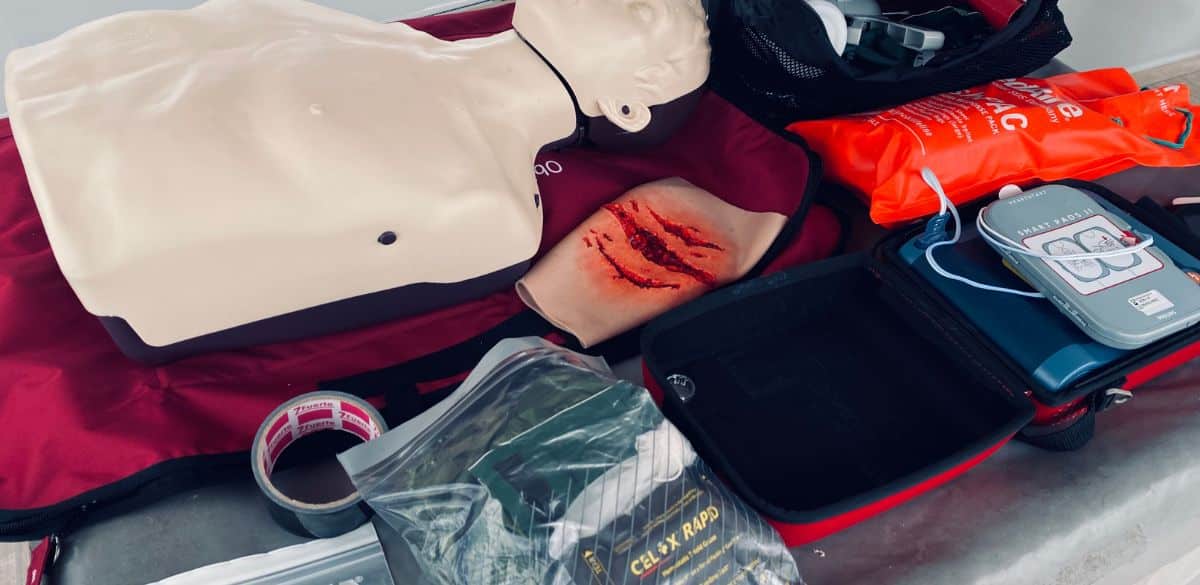
There is a huge difference between knowing what to do in a medical emergency and being able to do it when somebody is frightened, in pain and depending on you.
That difference is where MSOS training comes into its own, and that is why we are considered the leading yacht medical training provider, and we are regularly trusted with training those who really need it, such as high-performance race crews, major ocean race participants (Golden Globe Race and Volvo Ocean Race) and families of sailors embarking on the ARC. MSOS is the first choice for medical training, kit and a telemed service.
Our courses are designed for people who may have to respond in the real world, often in challenging circumstances on a moving hospital with other dangers, and sometimes a long way from an ambulance or hospital. Whether someone is completing the STCW Medical Care On Board Ship course, refreshing existing skills or taking part in onboard pre-season first-response training, our aim is never simply to help them pass a course. We want them to leave feeling capable, confident and ready to act.
Medical emergencies onboard do not happen in the calm, controlled way they appear in a textbook. They happen in tight spaces, noisy engine rooms, busy galleys, guest cabins, beach clubs and tenders. They happen at night, in poor weather or when the yacht is hours away from shore. The casualty may be a close friend or colleague, and the person responding may have very little time to work out what is wrong.
That is why MSOS training is practical from the beginning.
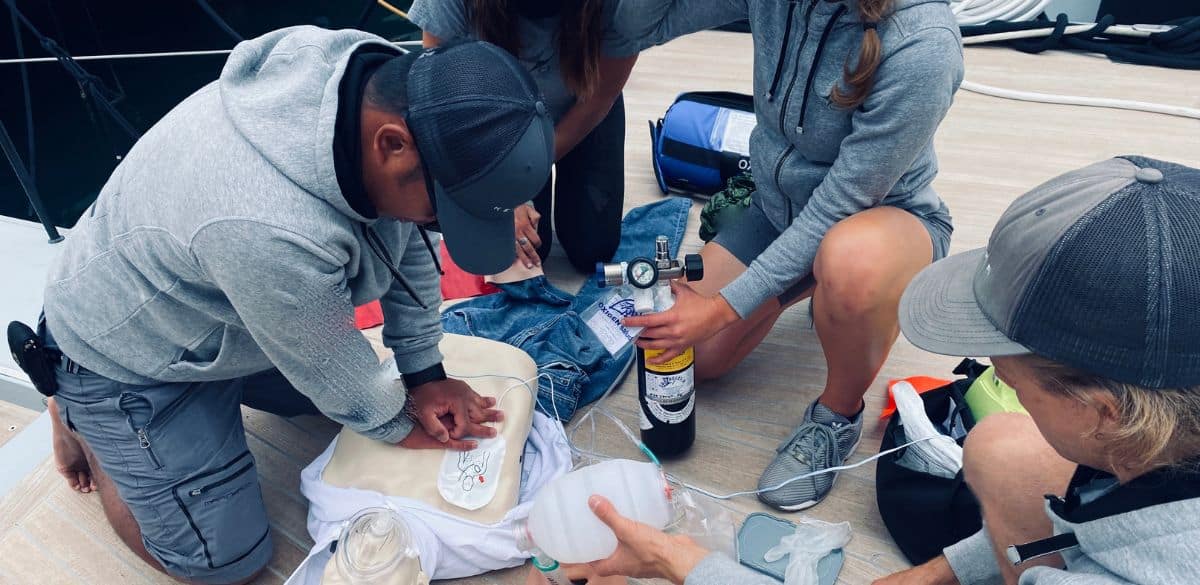
Of course, our courses cover the theory that crew members need to understand. However, we do not believe that people learn emergency medicine by sitting quietly through hundreds of slides. They learn by seeing, discussing, practising, making decisions and trying again. They learn by getting their hands on the equipment and discovering what it actually feels like to use it.
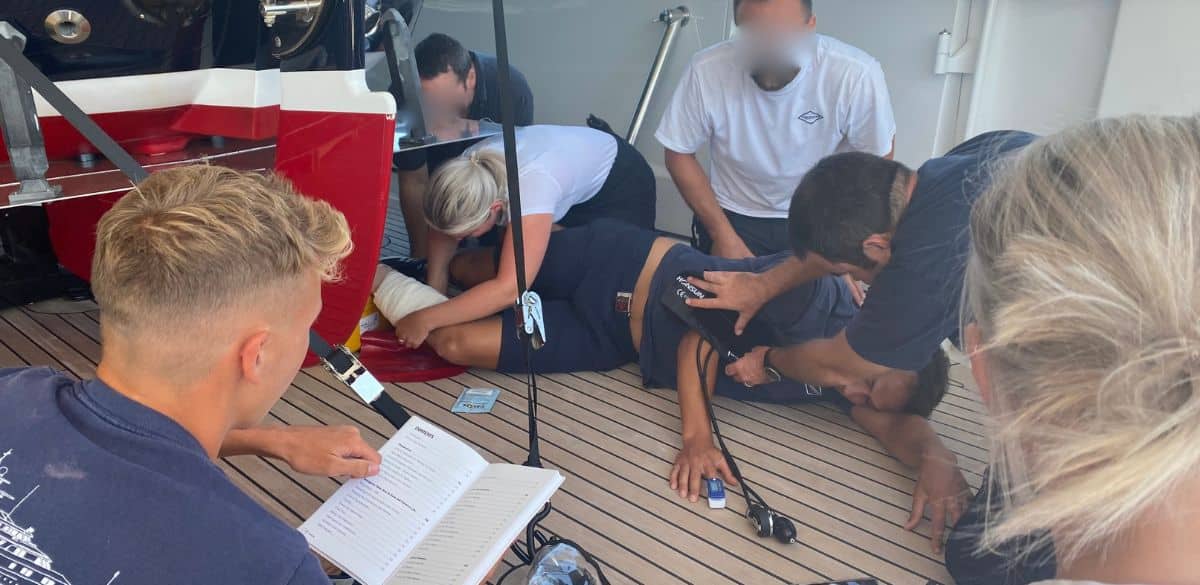
Our learners practise CPR, airway management, oxygen therapy, defibrillation, bleeding control, wound care, casualty assessment and immobilisation. They work through realistic scenarios involving burns, fractures, head injuries, choking, drowning, shock, chest pain, breathing difficulties and other medical emergencies. They learn how to recognise deterioration, communicate clearly with the rest of the team and contact telemedical support when professional guidance is needed.
Most importantly, they practise putting all of those skills together.
It is one thing to know how to apply a tourniquet when an instructor is standing beside you and telling you what to do. It is another to enter a simulated emergency, find a casualty with a serious injury and decide what must happen first and how to triage injury. The second experience is more challenging, but it is also where confidence begins to grow.
The STCW Medical Care On Board Ship and Medical First Aid programmes are especially valuable because they prepare seafarers to take responsibility for medical care when a doctor or paramedic is not immediately available. This is a significant responsibility, and the course needs to reflect that.
The MCOB programme covers far more than basic first aid. Learners develop a structured approach to examining a casualty, monitoring vital signs and recognising both traumatic injuries and medical conditions. They explore infection, sepsis, pain management, medication, wound care, burns, fractures and the continuing care of a casualty onboard. They also learn about record keeping, hygiene, communication with telemedical services and the practicalities of arranging a medical evacuation.
That sounds like a lot, because it is. However, complex information does not need to feel intimidating.
One of the things MSOS does particularly well is make medical knowledge understandable. Our trainers take complicated subjects and turn them into clear actions that crew can remember and use. We explain why something matters, show what it looks like and then give learners the opportunity to practise it.
We do not want somebody to remember a complicated lecture about shock but forget what to do when a casualty becomes pale, confused and clammy. We want them to recognise the problem, start the correct immediate care and know when to escalate.
The atmosphere on our courses is also important. Medical training deals with serious subjects, but that does not mean the learning experience has to feel heavy or frightening.
We have fun while we learn.
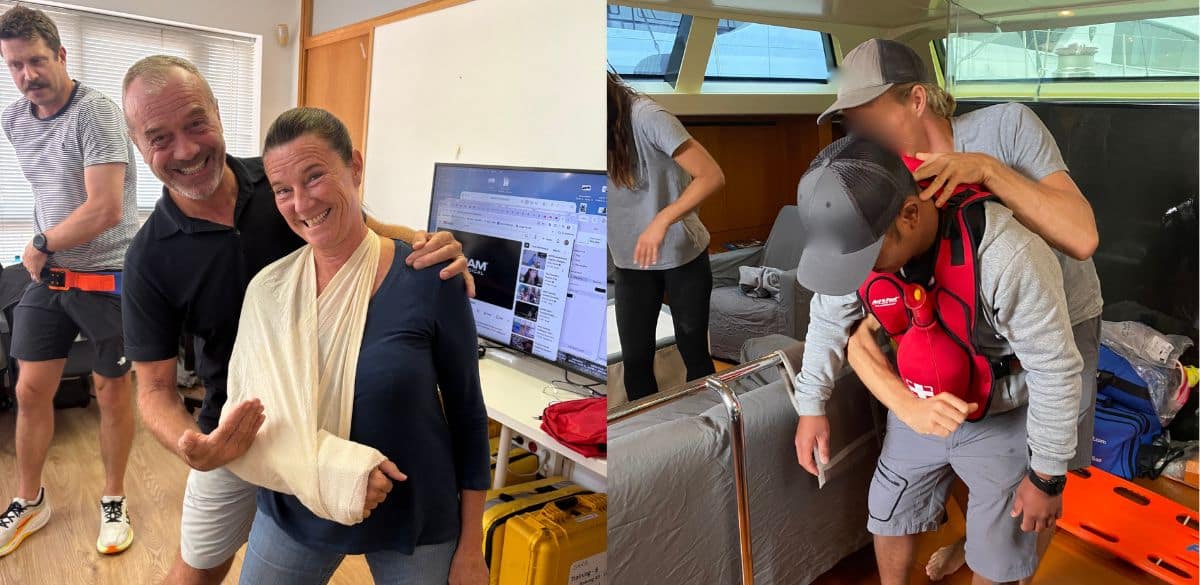
People remember more when they feel relaxed enough to ask questions, make mistakes and get involved. Our sessions are energetic, friendly and interactive. There is discussion, humour and plenty of movement. Learners are encouraged to participate rather than sit silently and hope they are not asked anything.
Nobody is made to feel uncomfortable for not knowing an answer. Many crew members arrive convinced that they are “not medical” or worried that they will do something wrong. By the end of the course, they are often the same people confidently leading a casualty assessment or organising a team response.
That change is one of the most rewarding parts of what we do.
Our trainers bring genuine clinical and maritime experience into the classroom. Sara, John, Steve, Floris, Ali and Claire all understand emergency care, but they also understand yachts. They know that the ideal treatment described in a hospital guideline may need to be adapted when the casualty is in a crew cabin, on a bathing platform or halfway through a passage.
This combination of medical expertise and maritime understanding makes the training relevant. The examples are not generic workplace scenarios involving an imaginary office casualty. They are situations that yacht crew can realistically encounter.
Our trainers can also answer the questions that naturally arise once people begin thinking about real incidents. What if the casualty is trapped in a small compartment? What if the yacht is moving? What if the person needing help is a guest? What if there is only one trained responder available? What information will the telemedical doctor need? How do we manage the casualty safely until evacuation becomes possible?
These conversations turn a course into something much more valuable than a certificate.
The facilities also play a major part in the MSOS experience. We deliver training in excellent facilities across multiple locations (UK, Palma, Antibes and Fort Lauderdale), giving learners access to realistic equipment and spaces where they can practise properly. The environment feels professional, modern and purpose-built for learning, and our trainers can also travel to the yacht to provide exciting onboard pre season first response training for crew in any location. The worst moment as a captain or senior crew is to be in a serious medical incident and look around and realise everyone else is panicking and not helping!
Our onboard pre-season first-response training is unique because it places the learning exactly where an emergency may happen. We can walk through the yacht with the crew, review the location of medical equipment and explore the practical challenges presented by that particular vessel.
Every yacht is different. The route from a guest cabin to the passerelle may be narrow. The main medical kit may be stored several decks away from the tender. Oxygen equipment may be difficult to access quickly. A crew member may know where the defibrillator is but never have opened the case. The team may have practised CPR ashore but never considered how they would manage it in a tight cabin.
Pre-season training allows us to identify these issues before they become problems.
The crew can practise responding as a team, using their own equipment and moving through their own spaces. They can decide who will collect the medical kit, who will contact the bridge, who will speak to telemedical support and who will prepare for evacuation. They can test whether their plan actually works instead of assuming that it will.
These sessions can be tailored around the yacht’s itinerary, crew experience and likely risks. A yacht operating in remote cruising grounds may need a different focus from one spending the season close to major ports. A vessel with extensive water-sports activity may want to concentrate on drowning, spinal injuries, trauma and marine envenomation. Another team may benefit from practising severe allergic reactions, burns, cardiac emergencies or managing an unwell guest over several hours.
The result is training that feels immediately useful.
It also helps create a stronger safety culture onboard. First response should never depend entirely on one medically trained crew member. That person may be off the vessel, injured themselves or unable to reach the casualty immediately. A well-prepared crew understands the basic plan and can support one another.
Good teamwork is essential during any emergency. People need to communicate clearly, listen to instructions and avoid everyone trying to do the same task. MSOS scenarios help teams practise leadership and coordination as well as medical skills.
Sometimes a scenario becomes slightly chaotic. That is not a failure. It is a valuable opportunity to discover what needs to improve while everyone is safe and the casualty is a manikin.
We believe training should build confidence without creating false confidence. Learners need to understand what they can manage, what requires professional advice and when evacuation must become the priority. They also need the confidence to pick up the phone and speak clearly to a telemedical doctor.
The aim is not to turn yacht crew into doctors. It is to make them excellent first responders who can assess the situation, deliver effective immediate care and keep a casualty as safe as possible until further help is available.
MSOS courses are memorable because they combine expert teaching, realistic practice, excellent facilities and a genuinely enjoyable learning environment. They respect the seriousness of medical care without making the subject inaccessible.
Crew leave with more than information. They leave having opened the equipment, used it and tested themselves in realistic situations. They have asked questions, laughed, made mistakes and improved. They have experienced what it feels like to take control of an emergency rather than freeze and wait for somebody else.
At sea, professional help may not arrive quickly. The first few minutes belong to the people already onboard.
MSOS training makes sure those minutes count.
Book your training today at www.msos.org.uk or contact sally@msos.org.uk






0 Comments