
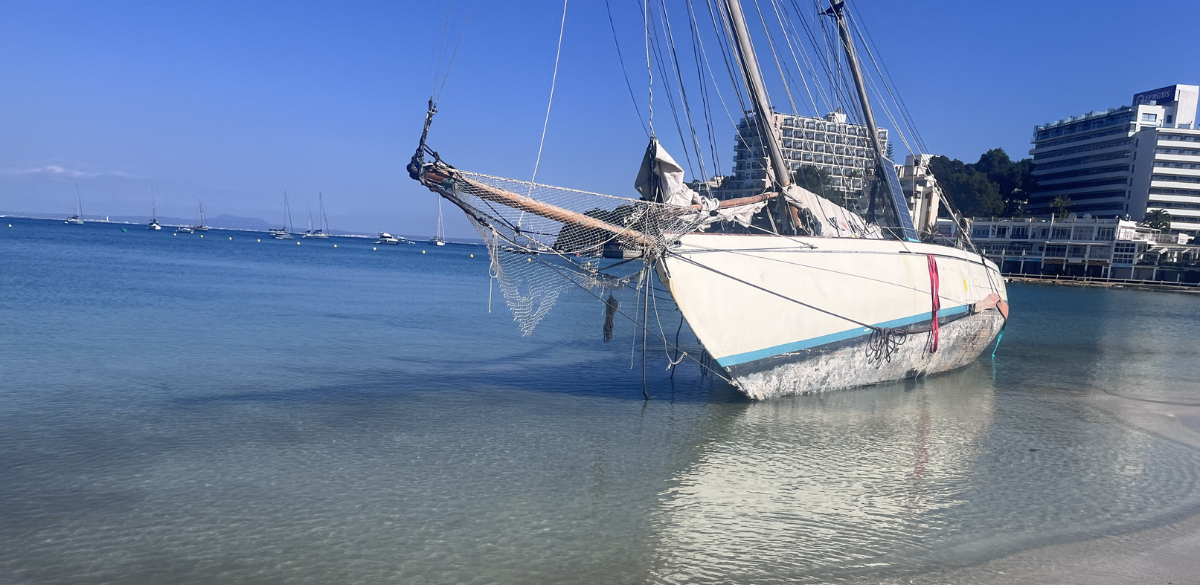
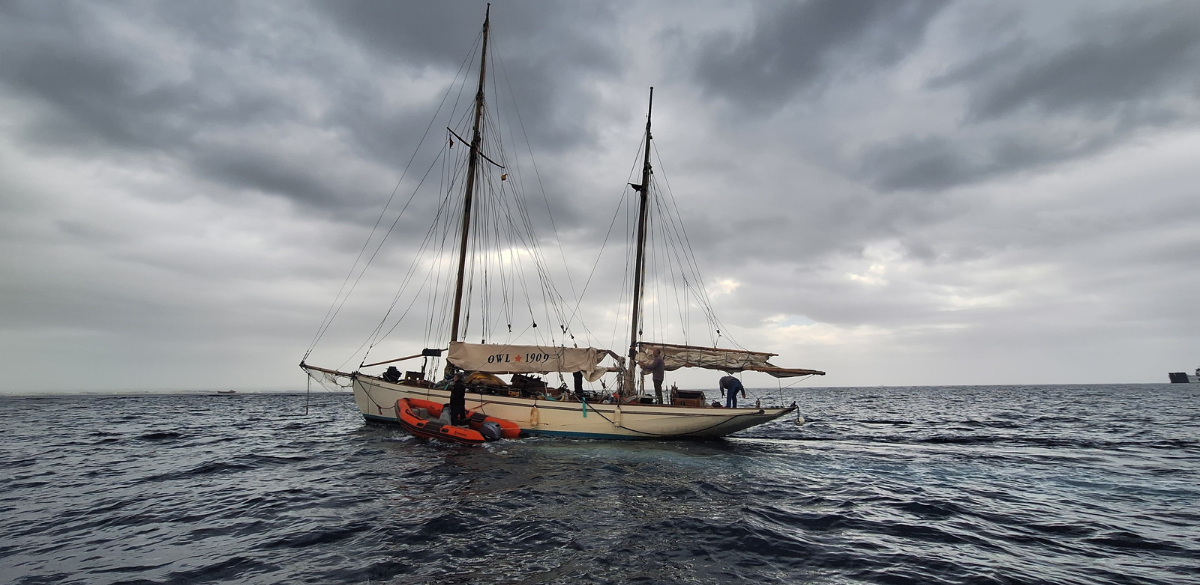
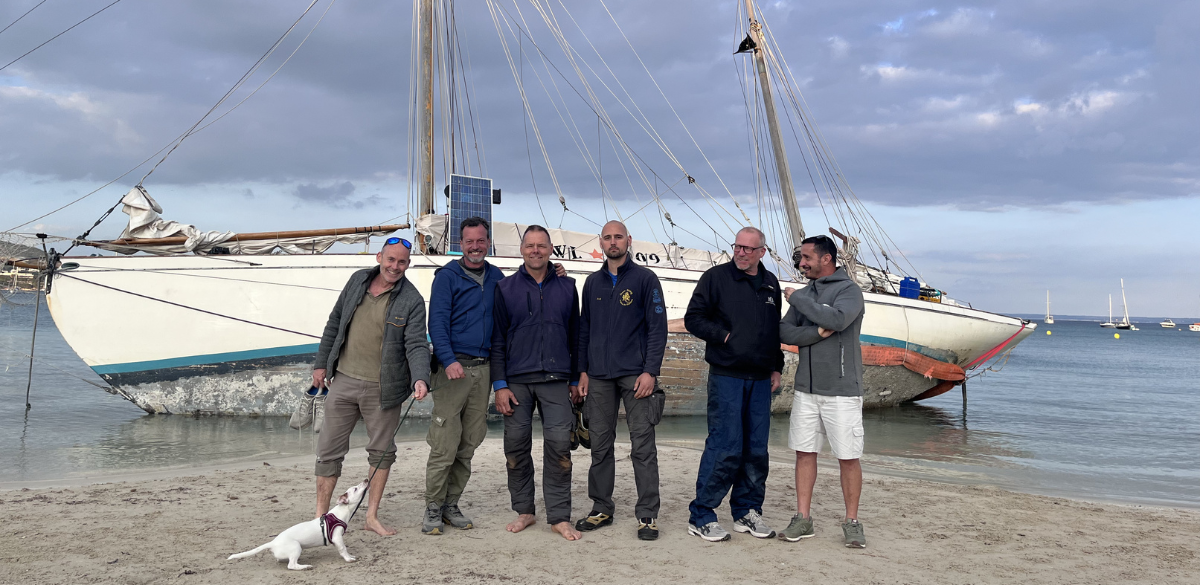
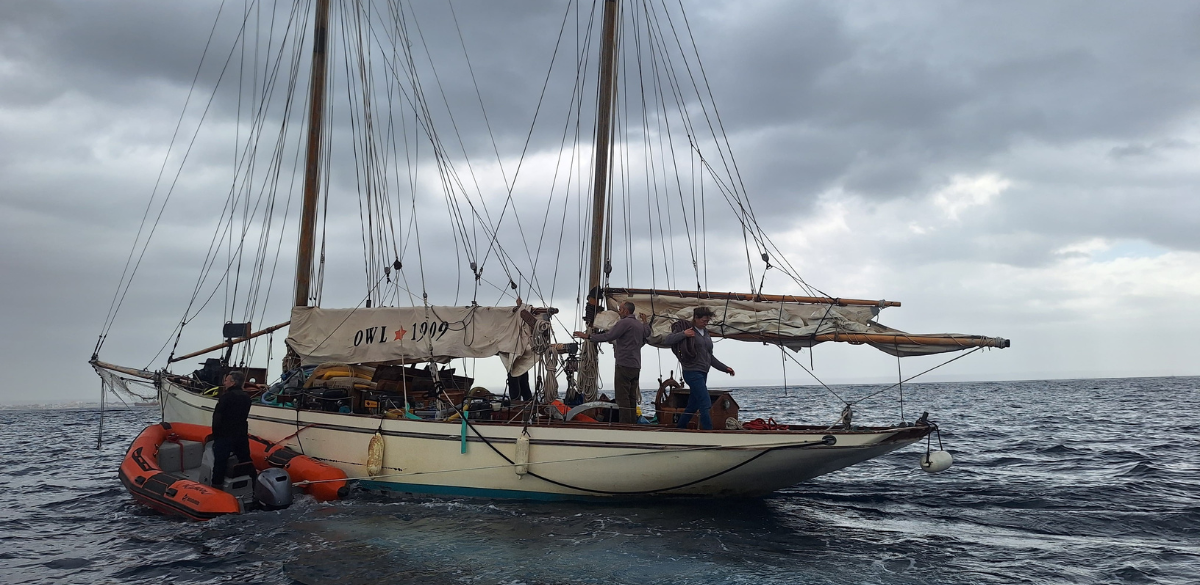
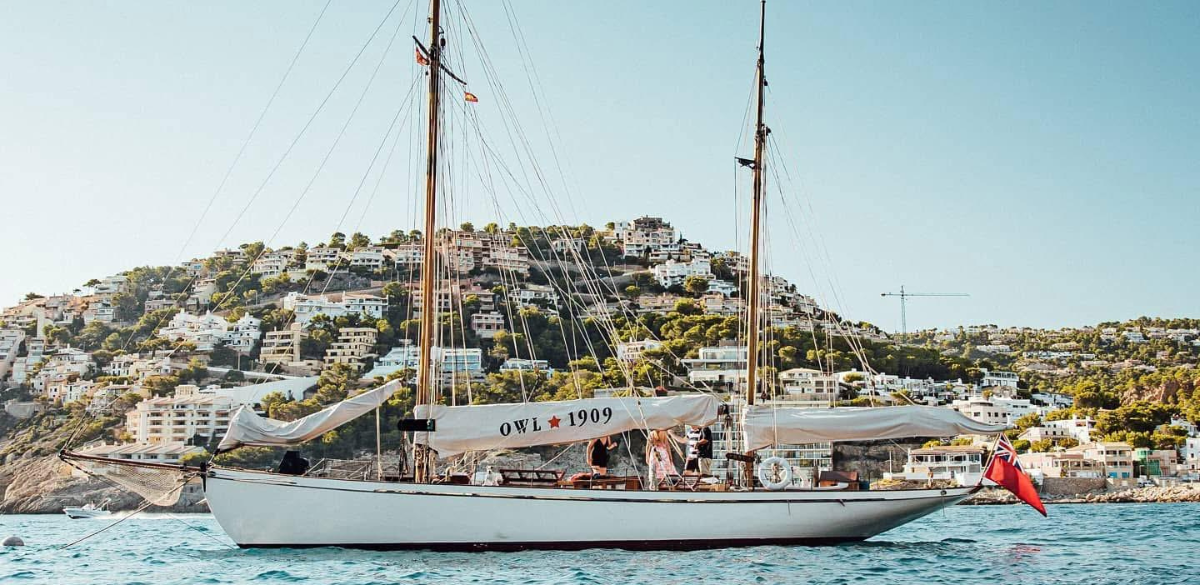
A boat on the beach. A man on a mission. We talk to Jim Passmore, local sailor and yacht manager, about the rescue of SY Owl, a 117 year old, 21 metre sailing yacht stranded on the sands of Palmanova beach.
What had happened to SY Owl?
Owl had been wintering on an unregistered mooring when a storm in early January broke her free. She was washed towards the beach and came to rest on the sand.
When I spotted her, I was horrified. The last time I’d seen Owl, she was sitting pretty on a mooring in Andratx. I spoke to the owner, who explained that the council had been patient but with the tourist season starting, he’d been given just 24 hours to come up with a plan, otherwise the diggers would move in and break her up for disposal.
Why is Owl special?
Owl is one of the last remaining boats from the Edwardian era of British yachting. Designed by Frederick Shepherd and built by the White Brothers of Southampton, who also built the 1920 gaff-cutter SY Lulworth, and she remains largely original.
She has an intriguing history. Owl survived two world wars, she has been raced, sailed across the Atlantic, and was stolen at one point, resurfacing in New Caledonia, without a mast!
So, what happened next?
The owner was in a predicament, no insurance, and little time. I went home to a sleepless night and by 04:00, was convinced we had to help. I went to get coffee and I picked up the phone. I was not going to let that boat meet her end on the beach.
With the Owner’s agreement, I contacted Ocean Divers in Palma and Felix Busmann, a marine surveyor. We inspected the hull, found it was not particularly damaged, and began making plans.
How did the rescue mission go, what were the biggest challenges?
Here’s where it got complicated. Step one was to get the boat off the beach. Step two was to keep her afloat. Step three was to get her somewhere she could be lifted out, step four was successfully doing so, and then step five was finding somewhere to stand her.
The problem was, we couldn’t do step one until we had a plan for step five, and that’s a challenge in Mallorca this time of year! The team from Calanova Sailing School, being the closest marina, tried everything.
STP would help us get the boat out of the water, but they couldn’t offer space for her. I contacted the President of the Port Authority and, appreciating the special nature of our mission, he kindly allowed us to lift the boat out at STP and transport her to the Port Authority dock next door.
The mission began the following Monday. The effort was led by Thomas and Andreas from Ocean Divers. We had a team of eight people, all specialists, two dive boats, two large anchors and some expensive salvage equipment.
The boat’s age, wooden construction, and potentially delicate condition made it a challenge. Owl was only sitting in 70cm of water on the beach but had a 2.3m draft. Lines were affixed at the bow and stern, and we gently pulled back and forth to loosen her before placing flotation pads beneath the keel.
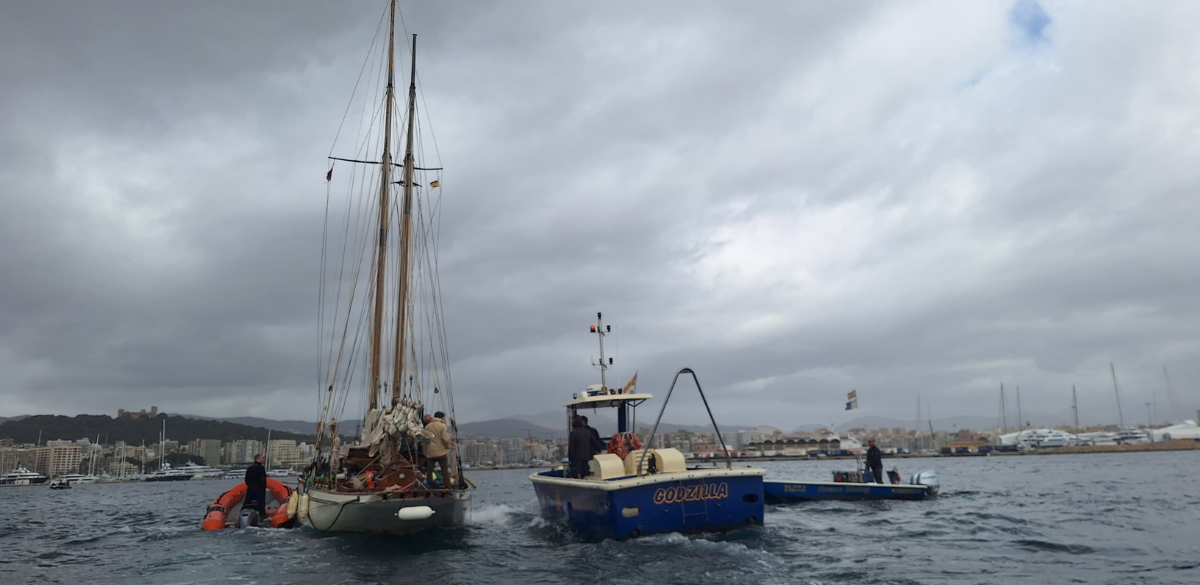
It took hours to move her just a few centimetres. Eventually, Ocean Divers managed to get her off the beach undamaged. Once free, we set the pumps to work. She was taking on water and would’ve sunk. We slowly towed her to Calanova who kindly gave us a berth for the night so we could secure her. We worked late to stem the flow of water and I stayed aboard, in rather damp conditions, to keep the pumps running.
Come sunrise, she was still afloat! On we went towards Palma, where Ocean Divers rejoined us. The team at STP were waiting, she went under the straps, came out the water, and the Port Authority were ready, having repositioned a fleet of rental cars to make space for her!
A few rules might have been bent, but this was something that just had to be done. It was a huge collective effort; I can’t thank everyone involved enough.
What’s the most unusual thing you’ve discovered about the boat or found aboard so far?
There were some unexpected connections – both Felix Busmann and Thomas Heinse had worked on Owl during their time as boat builders, decades ago.
Despite sitting exposed for nearly three months, nothing appeared to have been stolen. We have the bronze compass binnacle and ship’s bell small treasures, but integral to the boat’s provenance, and a slightly soggy racing certificate from 1951.
What do the restoration plans look like?
It’s difficult to say. Access to the Port Authority area is tightly controlled. I’ve not been back onboard since she arrived there. The next step, once we get access permissions, will be to visit with surveyors and evaluate what needs to be done. The priority will be to make her watertight, and we can’t leave her out of the water for too long as the timbers will dry out. Then we’ll make a full list of works required to restore her to her former glory.
And what does the future hold for Owl?
We’re exploring all options. When I got involved, I had no idea where this would lead. What’s most important is that Owl’s story continues.
Perhaps someone with appropriate resources would like to take on the restoration project, or maybe across industry contacts and private partners we can achieve some sort of shared ownership. What we have come to realise, is that there’s a lot of people following this story, and a lot of people who care. One way or another, hopefully she’ll be making happy memories for many years to come.


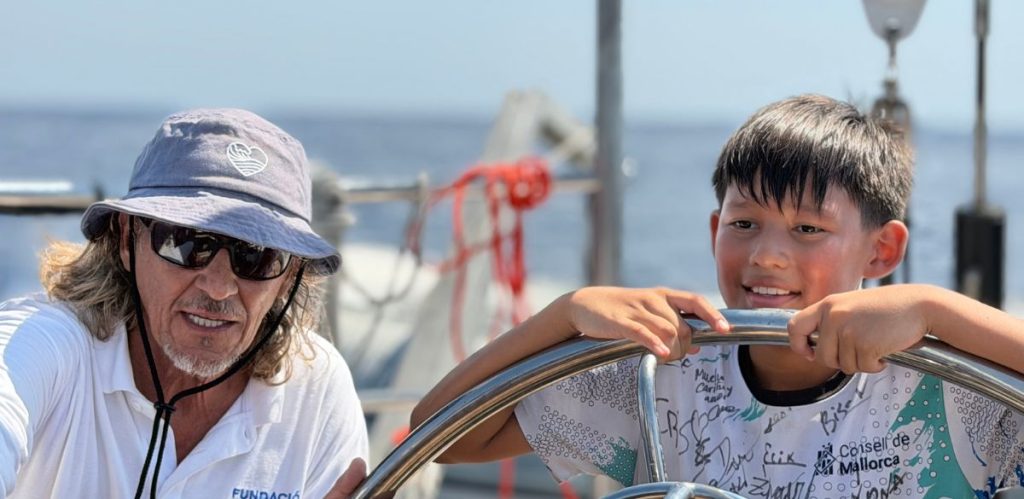
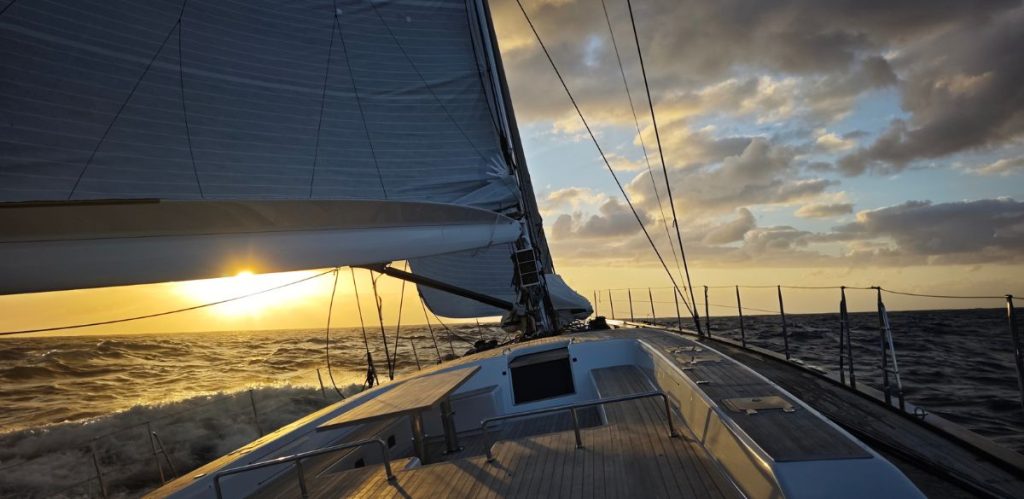

Happy memories – please take a look at my Instagram account
christineboes75
The video shows happy times we spent on Owl…
I wish you that Owl will shine in its former glory as soon as possible.