
 Today I would like to share with you my passion for Marine Medicine, a topic close to my heart. As most of you know, my life revolves around the Superyacht industry and Marine Medicine. Due to the fact my family and friends are all involved heavily in the industry, it is in my best interest to make mine and everyone else’s sailing environment safer.
Marine Medicine is a unique field due to the fact that we, the yacht crew, are often so geographically remote. We rarely have the luxury of calling emergency services, the ambulance or even a rescue Helicopter.
 How about a story here to illustrate the above, for example. I was recently racing on a yacht, when a large wave broke over the deck and trapped a number of crew members under the spinnaker, which they were packing. Not only were the four deck crew crushed by the spinnaker, but they were submerged in a couple of feet of water and trapped against the gunwale.
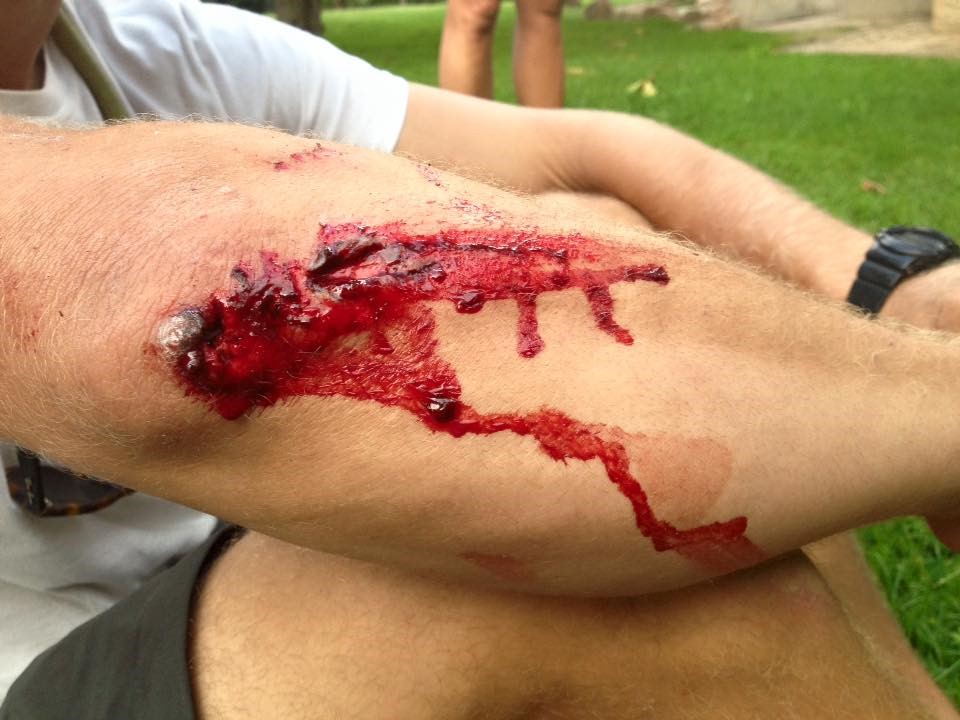
One crew member sustained a most traumatic injury, plus there were both major and minor injuries to other crew members. It was incredible how the crew jumped into gear. As I began the primary survey, checking for major injuries, the crew got the Medical Kit plus ice, blankets and oxygen. They called our medical support team. One crew member scribed the process, another prepared emergency drugs and the list goes on. These vital actions were in a calm manner and it was incredibly professional. In fact it was so professional, it felt like a drill.
 Would you like to know what, possibly, saved this crew members life and definitely his limbs? Four months prior to this I had spent a week on this same yacht training with the crew in: Elementary First Aid, Medical First Aid at Sea and Medical Care On Board Ships. It was evident, at the time of the accident, how effective such training is. I have never been so proud. Funnily enough after the incident people praised me for how well the situation was dealt with, however, in all honesty I really did not do much because the crew were all over it, totally in control of stabilising the patient and treating for shock and preserving this man’s life.
Although I am lucky to be well trained it shows from this story that anyone can be trained in lifesaving, not only able to save a crew members life, but maybe in future being able to save your loved ones life, your child´s life or your own life.
 Because I love to stay up to date with emergency medicine and increase my first-hand experience, each year I do an emergency nursing stint in Outback Australia. My experiences here are invaluable, they provide me with the evidence based practise, which I need to pass onto the yachting industry, for education of yacht crew and for my work as a superyacht medic. These nursing stints, along with some ocean racing and deliveries, provide me with the cutting-edge knowledge and experience that I share with you in our medical courses.
Last summer, I had an interesting case, a man got his hand trapped in a working crane. To escape, he was forced to cut his own hand off with a Stanley knife and drive himself for 45 minutes to our base. He had no phone reception, so he could not call emergency services. He arrived, with his amputated hand in an old plastic bag, the injury was packed with his clothing. This fellow had attended a remote first aid course (at our local ambulance service) only the month before, he said the course gave him the instinct to dress the wound and apply a tourniquet (yes, he used his own belt) he said the knowledge saved his life. He was flown out to a metropolitan trauma hospital where his hand was successfully re-attached. The surgeon stated that if this fellow had not acted so proficiently he would not have a hand today.
I find trauma and crush injuries fascinating. We, as yacht crew, have a high risk of suffering these types of injuries. Therefore we must know how to prevent and treat such accidents.
In the courses I teach I highlight the importance of knowing what to do before we call for help (if calling for help is even an option, of course). If someone loses a leg, we must know what to do to stabilise the patient and control the bleeding before we can pick up the phone. If we rely on calling for help, that person may well bleed out while we are trying to get the call established. Believe me, as a paramedic, I have arrived on the scene of many patients who bled out or stopped breathing while their friend tried to call the ambulance.
I cannot emphasise enough the importance of actively participating in medical training. There is nothing worse than finding a multi trauma and not knowing how to bandage an amputated leg, or not knowing if the tourniquet was still even recommended and then not knowing what to do with the amputated part of the leg (believe me, you do not want to be in this situation).
Medical training needs to be current and it needs to be refreshed, and not just when medical trainers come on board. I beg you all to do medical drills monthly.
In saying that, I am pleased to say we, at MSOS will be running some epic medical courses this Winter. We do not just do the MCA medical training, we also do a range of bespoke courses such as:
- Kids (paediatric) first aid
- Chase boat medics
- Dressing and wound care
- Wilderness medicine and
- Water safety and patient retrieval
- Lifting and back care
- Mental health first aid (dealing with depression, anxiety etc).
- Alcohol and drug awareness
We perform training on board your vessel, villa or home and in the classroom in Santa Catalina, Palma de Mallorca and MSOS headquarters in Southampton.
Stay Safe and remember prevention is easier than cure. Take care on the water.
Amanda Hewson, MSOS Medical Training Manager




0 Comments