


Sun, salt air, and intensive use define everyday life on yachts in the Mediterranean. What feels like pure enjoyment for crew and guests places significant demands on materials on board. This is most evident on seating and lounging areas, which are used daily and remain exposed to the sun for long periods.
In the Balearics, it quickly becomes clear that inexpensive textiles are rarely designed for these conditions. What may appear attractive at the time of purchase often loses functionality and visual appeal much sooner than expected.
Materials: designed for a specific purpose
Not every outdoor fabric is suitable for marine use. Yacht textiles must retain colour, hold their shape and perform reliably under constant exposure and frequent use. Lower-quality materials often fade and lose elasticity under strong sunlight.
High-quality textile solutions are developed specifically for these stresses. They maintain structure and appearance over multiple seasons—an essential factor in the Mediterranean environment.
Fit and craftsmanship: why custom matters
One of the most significant differences lies in fit. Standard products are based on average dimensions, while yachts are inherently individual. Seating and sunbathing areas vary greatly in shape, radius and cushion thickness.
Made-to-measure covers are tailored precisely to each surface. They sit smoothly, remain stable and do not shift during use. This improves comfort and helps protect the underlying upholstery. Manufacturers such as fender-design, which specialise in custom yacht textiles, regard precise fit as one of the key indicators of quality.
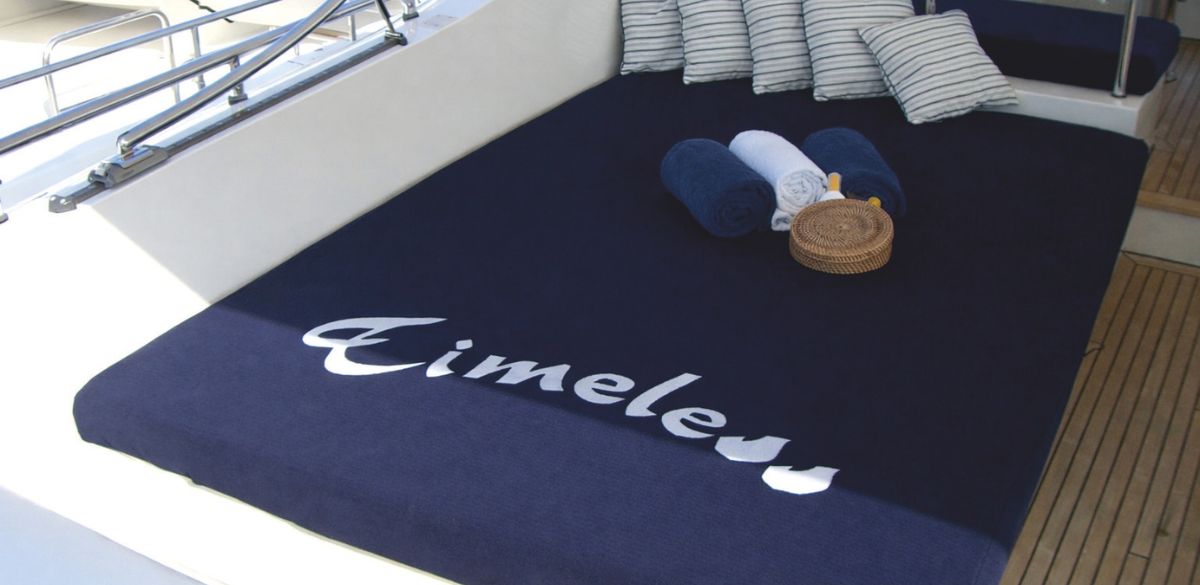
In addition to fit, modern production techniques allow textiles to be personalised directly during manufacturing. Using Jacquard knitting technology, patterns, lettering or yacht names can be integrated into the fabric structure itself rather than applied afterwards. This approach ensures long-lasting visual consistency and avoids additional layers or surface treatments.
“Those who buy cheap often end up buying twice—especially in the Mediterranean,” is a commonly shared observation from the fender-design environment.
Uv resistance: the true test in the balearics
Intense sunlight is the primary challenge for onboard textiles in this region. Budget fabrics tend to age faster, with colours fading visibly and service life shortening considerably.
UV-stable yarns combined with appropriate manufacturing processes significantly slow this ageing. The benefits are evident not only in appearance, but also in long-term cost efficiency.
Why ‘cheap’ becomes expensive over time
Textiles that require frequent replacement generate higher costs in the long run. They also create additional effort and unnecessary material waste. For yachts that are heavily used, it soon becomes apparent that investing in quality from the outset is the more economical choice.
From lounging areas to fender covers
Seating and lounging areas are central to life on board, but they form part of a wider textile concept. Fender covers, cushions and other textile protection elements are exposed to the same environmental conditions. When these components are produced to the same quality standards, they contribute to a cohesive look and consistent performance across the yacht.
The relevance of tailored and durable textile solutions is also reflected in industry exchange. At this year’s Mallorca Boat Show, visitors can find further information at Stand B-27, where textile specialists from fender-design are available for professional discussion and insight into current developments.






0 Comments