


Your yacht: a research vessel
Just as the “Calypso” of Jacques Yves Cousteau was transformed to become one of the most prestigious and cost-efficient oceanographic research vessels, your yacht could also play an important role in the conservation of our oceans.
In order to achieve our conservation and sustainable development strategies, we need management based on science. On land, this is not so complicated, but when we are dealing with coastal and marine ecosystems we are faced with important logistical and economic challenges.
Despite the revolution in recent decades of our science of the atmosphere and oceans thanks to satellites, electronic monitoring systems and our capacity for analyzing big data, the open-ocean ecosystem still remains the least understood part of our planet. A vast three-dimensional “Blue Serengeti”.
So what role can my yacht play in this “scientific revolution” of modern technology? Well, firstly a yacht can assist with the vital task of calibrating EMS sensing and validating modelling of big data. That in itself is not only a very significant contribution to science and conservation, but it can also be a fascinating task, keeping alive the spirit of ocean exploration in its purest form.
The second role a yacht can play is that of actually conducting research expeditions, either opportunistically by recording data with diverse instruments that can be easily deployed during sailing and anchoring, or by actually offering itself as a research vessel to different specialist teams around the world, in a similar way to what Cousteau’s Calypso once did.
For research institutions around the world, marine surveys are a huge economic and logistical challenge. One day of an oceanographic vessel can cost between €15.000 to €60.000. Just organising the paperwork before being able to go out to sea can easily take more than 12 months. And then, when you have it all ready, the bad weather comes in and you have no options to “come next week”.
Before going down to the abyss in the “Cañón de Avilés” (Bay of Biscay), the research vessel Toftevaag had sent some of its scientific instruments to the Arctic Lodge, in preparation for the Amundsen Expedition of the S/T Alma in 2026. A towed array hydrophone for monitoring cetaceans and noise pollution and a “Manta trawl” for sampling microplastics are just some of the instruments the Alma will take to the Arctic in its sail through the Northwest Passage.
You don’t need any researchers on board if there is no space, but you can still make your yacht an opportunistic research vessel, deploying gear that requires no expertise, validating oceanographic and atmospheric EMS readings, listening to whales and dolphins, sampling environmental DNA, tracking tagged bluefin tuna, sharks, cetaceans, etc. It’s not only useful, but also fun for you, your crew, and your guests on board.
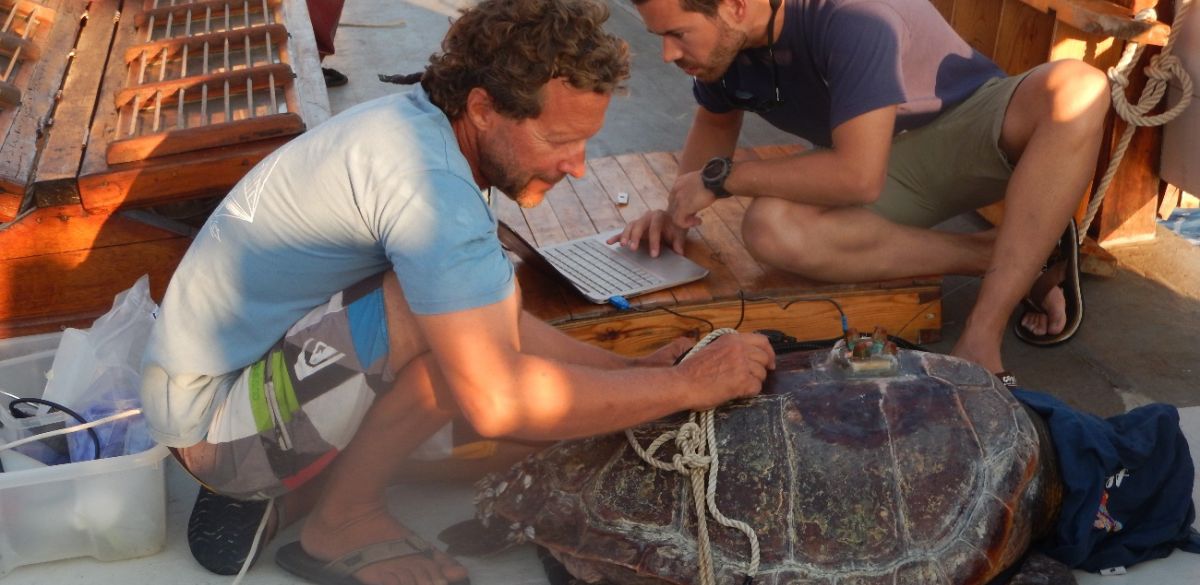
But take it one step further: become a dedicated research vessel for a couple of weeks. This is what Alnitak is proposing in 2026 to the charter vessel “La Juliana” in the context of the project LIFE OASIS. La Juliana was actually the first ferry to what is now the National Park of Cabrera. Restored in 2020, she is now a classy charter vessel operating in the Balearic Islands. In 2026, La Juliana will contribute to LIFE OASIS by providing a two-week-sea-turtle-tagging survey along the Emile Baudot Escarpment that runs south of the Balearic Islands. In exchange, La Juliana will offer a unique added value to its guests, discovering the amazing world of sea turtles, dolphins, and sperm whales in this “Mediterranean Blue Serengeti”, through exciting research activities, using drones, ROVs, satellite tags, CTDs, etc.
Through project LIFE OASIS, Alnitak seeks to promote an active engagement of the yachting sector in marine research and conservation. “Never stop exploring!”







0 Comments