


A career forged on the waves and in the workshops
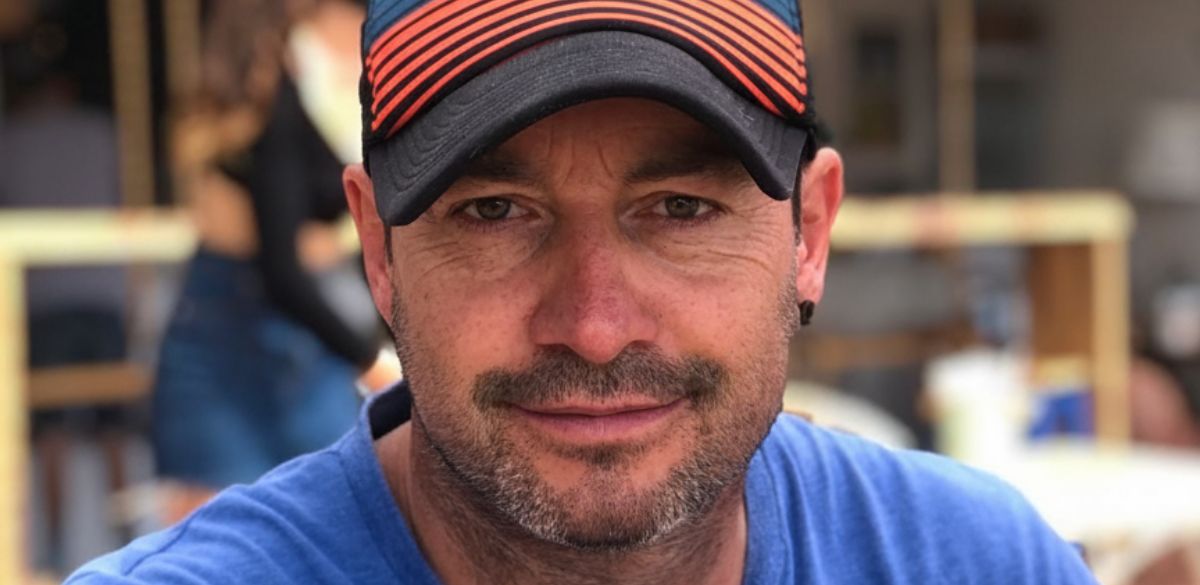
Ben´s journey in the world of high-performance sailing began as a child, racing dinghies off the shores of Brighton. By the age of 16, he had transitioned to yacht racing out of Brighton Marina, quickly gaining experience on the south coast, Northern France, the Channel Islands, and Ireland. His first Atlantic delivery, at just 18, saw him sail from Brighton to St. Lucia, leading to several years immersed in Caribbean racing during the early 90s.Time period format “early ‘90s
Upon returning to the UK, he honed his craft with a yacht fairing and painting company in Ancona, Italy, before embarking on formal studies in yacht manufacturing and management at the Southampton Institute (now Solent University). This academic foundation was followed by a period in London, where he applied his composite expertise to aircraft and Formula 1 projects at St. Bernard’s Composites in Farnborough.
His entry into the elite world of racing and superyachts began at Green Marine, contributing to the construction of iconic vessels like the PlayStation round-the-world catamaran, Assa Abloy I & II Volvo 60s, Ghost, and Sojana. He also played a key role in building what was, at the time, the world’s largest composite superstructure for a motor yacht.
In 2001, a significant career move saw him join the GBR Challenge America’s Cup team, where he was instrumental in constructing both racing boats and crucial tank test models for research and development. Following this, he ventured to Fano, Italy, to build two Wally yachts, Alexa and Y3k, before his initial move to Spain, working at Barcos Deportivos in Tarragona.
Ben Field contributed to Volvo 70 builds (Ericsson, Pirates of the Caribbean, two for Ericsson, one a race winner) and TP52s at Green Marine. In 2005, he led the interior structures team for Desafío Español at King Marine, Valencia, then joined Victory Challenge’s shore team and collaborated with Killian Bushe. He later built Luna Rossa’s STP 65, managed the TP52 Matador built at King Marine, and constructed large booms and composite hatches at Rondal/Royal Huisman. Moving to Palma in 2009, he became Production Manager at BM Composites, also building masts for Volvo 70s (Abu Dhabi, Sanya) and wing masts for Artemis America’s Cup. After BM, he was shore crew for Momo Racing (Maxi 72), then boatbuilder for Wally 80 Lyra, overseeing refits and acting as shore/race crew. He re-joined Luna Rossa in 2018 for the America’s Cup in Auckland, then collaborated with Innovation 3 in Palma, before returning to Luna Rossa as a senior boat builder for the 37th America’s Cup.
Most recently, he has been in Holland at Rondal/Royal Huisman, building a 98-meter mast and various components, alongside an intensive testing program for new defence projects. Beyond his prolific building career, he remains an active sailor, competing in prestigious regattas such as Copa del Rey, Palma Vela, Les Voiles de St. Tropez, Loro Piana, and Maxi Worlds, as well as offshore races like the Caribbean 600, Fastnet, and Middle Sea Race, aboard a diverse range of yachts from modern classics to high-performance sports boats.
Projects
75m Superyacht Composite Non Corrosion Vent Grills
In the world of luxury yachting, efficiency and aesthetics often intertwine, making the i3 Louvre grills project a clever innovation.
Historically, owners and crews of larger motor yachts have faced significant challenges regarding louvre grills, which serve essential functions such as engine room intake and ventilation. Painting these grills to the high standards demanded by superyachts has long been a labour-intensive and costly endeavor. The materials used often lead to persistent corrosion issues, resulting in an operational expense that can detract from a yacht’s overall budget—resources that could be better allocated elsewhere.
Enter i3’s innovative solution: meticulously engineered replacement grills designed to fit seamlessly into existing frameworks.
Once painted, the new grills can be effortlessly mounted onto their composite frames, marking a significant departure from the cumbersome and inefficient alternatives currently available. For those with hands-on experience with traditional louvre grills, the advantages presented by the i3 system are clear: this is not just an upgrade; it’s a game changer.
News:
As we go into 2026 i3 will be offering state-of-the art Rapid 3D scan to CAD solutions transforming how projects can be approached.
Did you know?
Composites were invented for the military
The very first fibreglass-reinforced plastic (FRP) boat was built in 1942 by an American engineer named Ray Greene. He was commissioned by the U.S. military to create a lightweight, non-magnetic material for minesweepers. The techniques he pioneered were also used to create parts for military aircraft.







0 Comments